Water is the first emergency basic most beginners overlook.
A filter can be useful. A storage jug can be useful. Purification tablets can be useful. But they do different jobs — and buying the wrong one first can leave you with a false sense of preparedness.
This guide explains the simple order: store clean water first, understand when a filter helps, and keep a treatment backup for situations where water quality is uncertain.
Start with water you can use immediately, then add backup layers.
The common mistake
Most people shop for a filter before they have water stored.
That is understandable. Filters feel like the “serious” preparedness item. They look useful, reusable and reassuring.
But in a short outage, water main break or local advisory, the first question is usually simpler: what safe water can your household use today?
A filter only helps if you have a source to filter and if that filter matches the problem you are trying to solve. Stored clean water is boring — but it is the foundation.
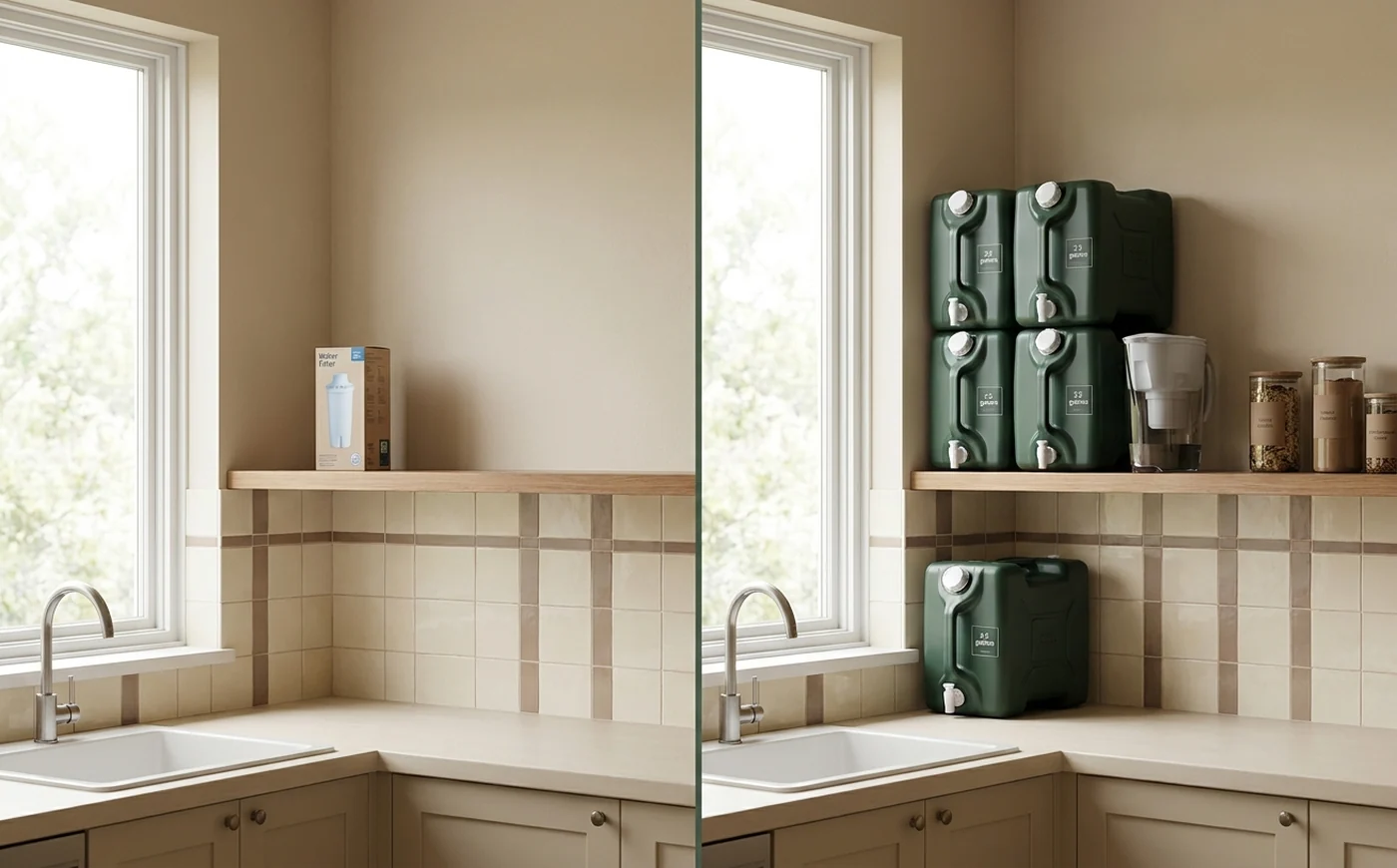
False start: filter first, no water storedBetter first step: stored water first
Start with water you can use immediately. Then add tools that help when stored water is not enough.
False start
I bought a filter, but I have no stored water.
Better first step
I stored water first, then chose a filter for backup.
The simple order
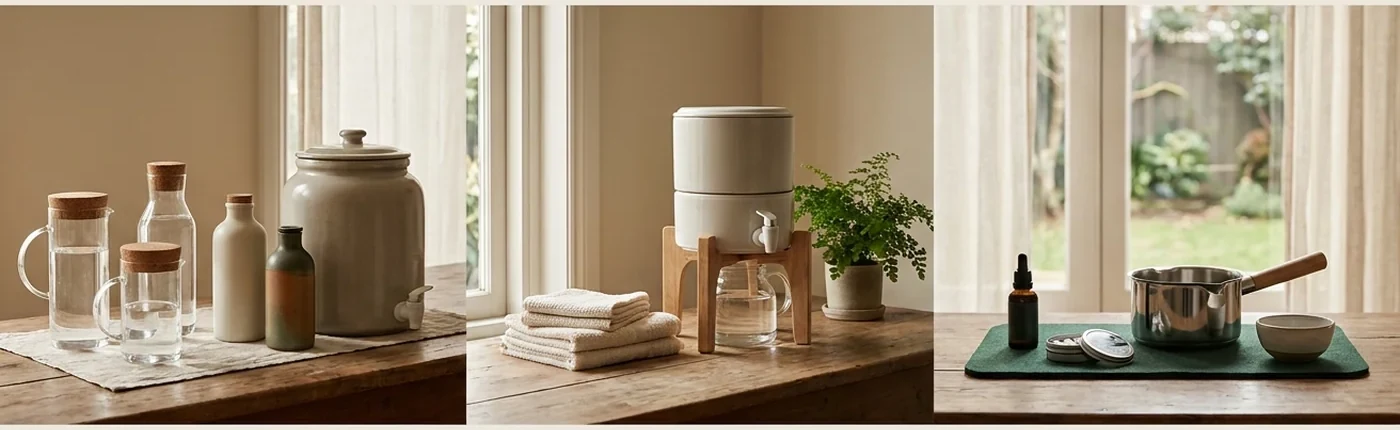
Use the three-layer water plan: store, filter, treat.
You do not need an extreme setup to begin. A practical beginner plan has three layers. Each layer solves a different problem.
StoreReady nowFilterReusable backupTreatWhen quality is uncertain
Layer 1
Store clean water first
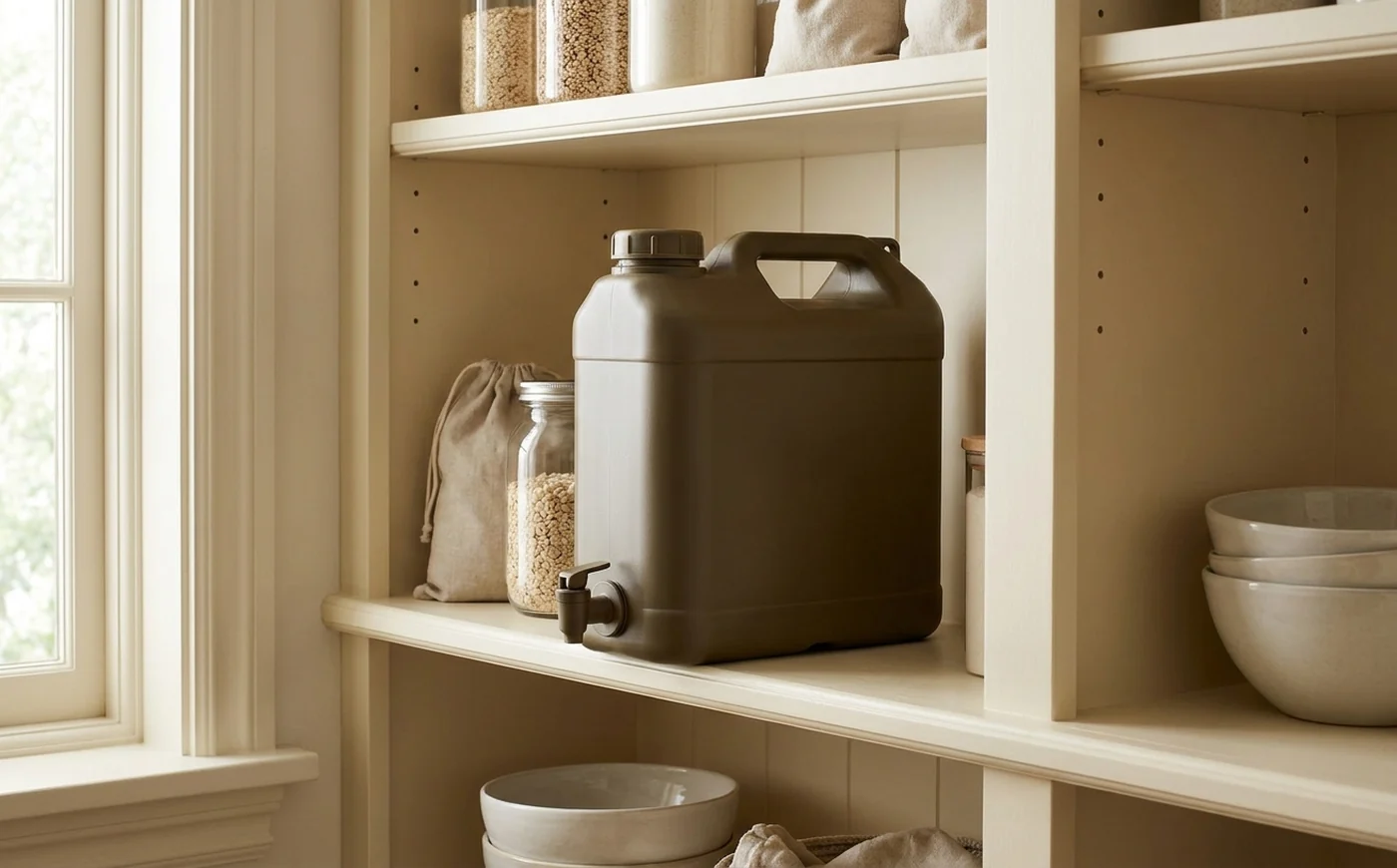
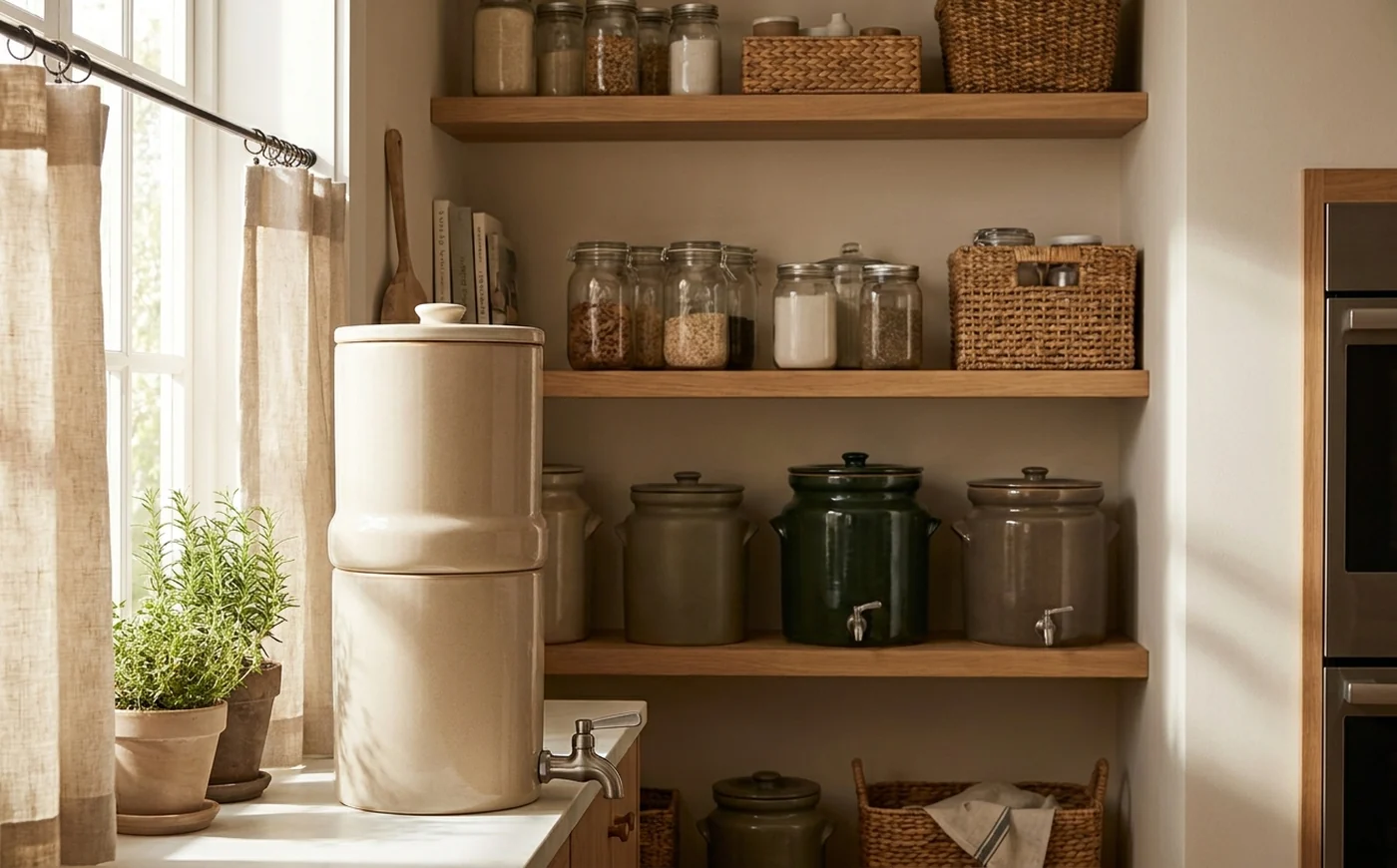
This is the immediate-use layer. Commercially bottled water or food-grade storage containers give you water that does not depend on power, plumbing or a filter working correctly.
Best for
apartments and small homes
short outages or water interruptions
people starting from zero
Look for
food-grade material
tight closure
easy pouring and cleaning
capacity you can actually store
Layer 2
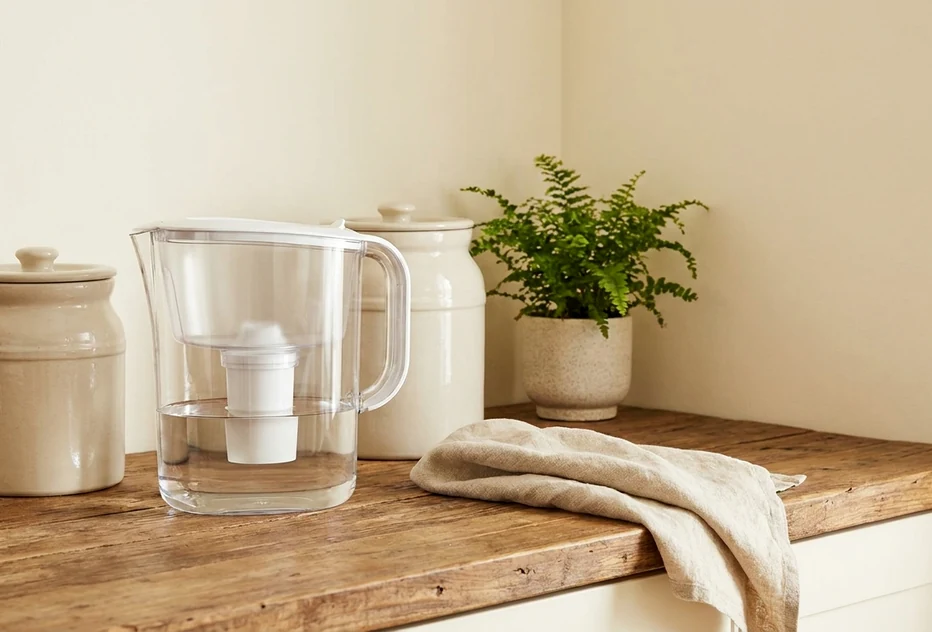
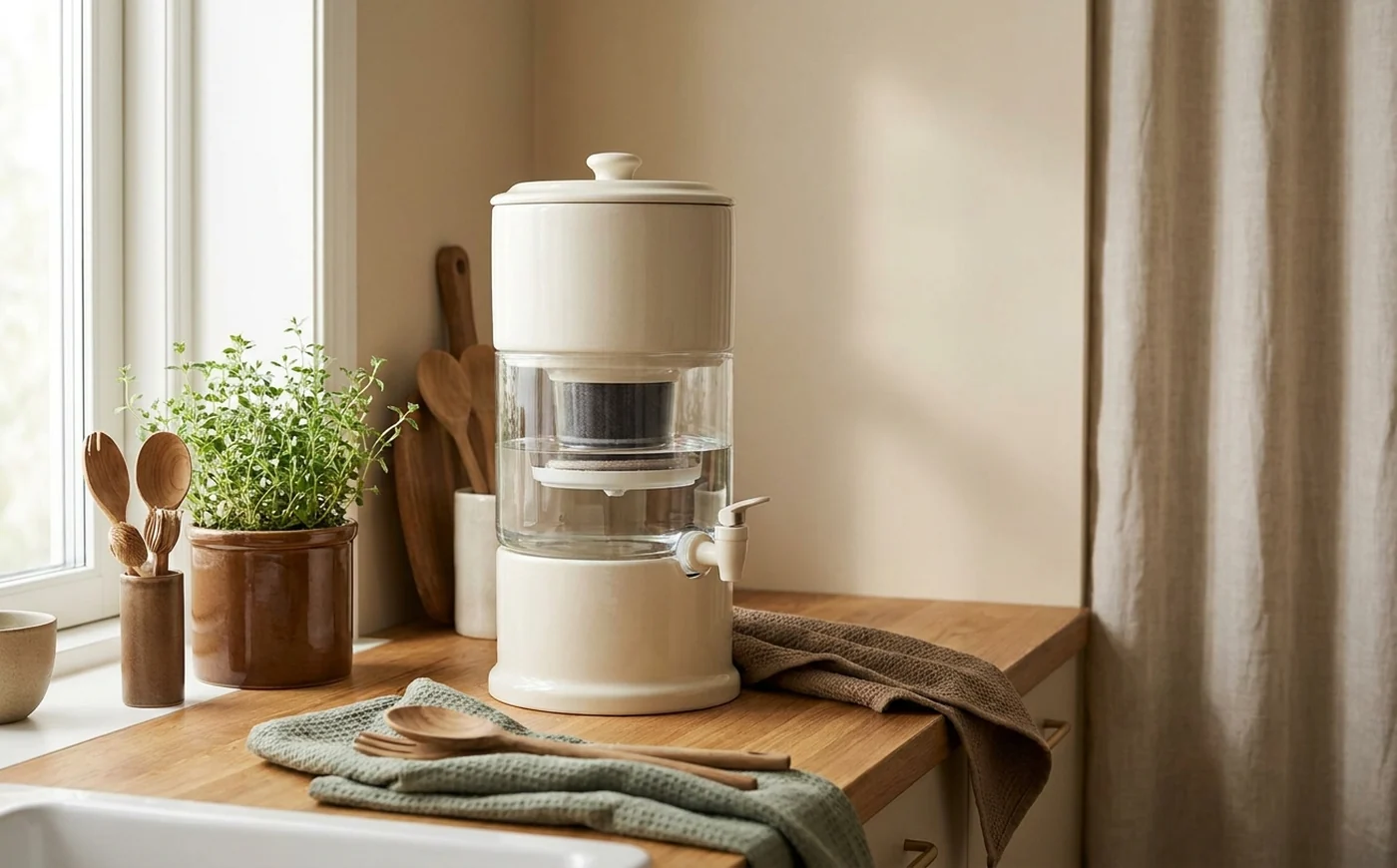
Add a simple filter when it fits the problem
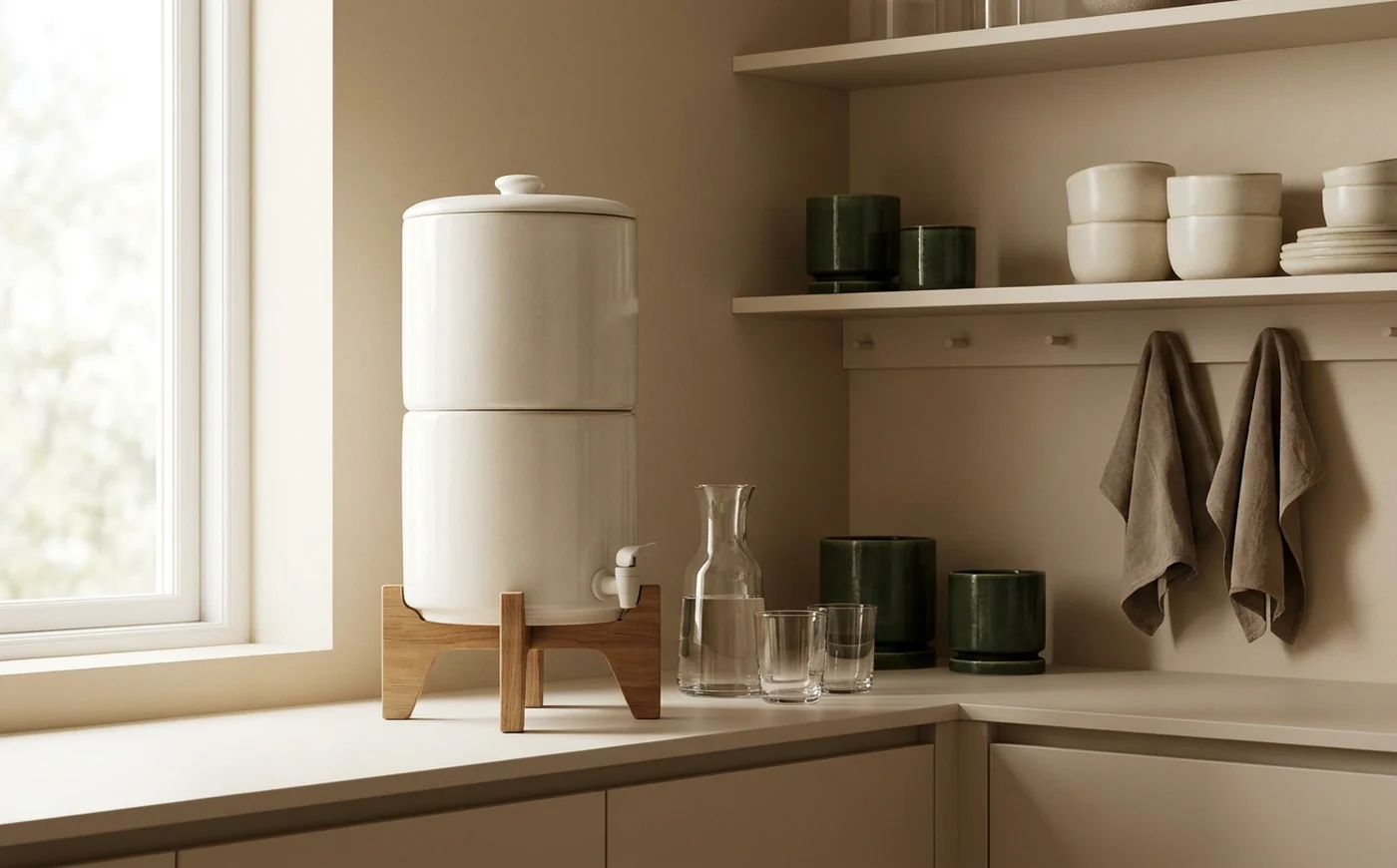
A filter can be useful for taste, particles, or certain contaminants — but filters are not all the same. The label matters: pore size, replacement filters and certified reduction claims matter more than hype.
Best for
countertop use
households that want a reusable backup
people willing to maintain replacement filters
Look for
clear filter claims
replacement filter availability
capacity and flow rate
easy cleaning
Layer 3
Keep a treatment backup
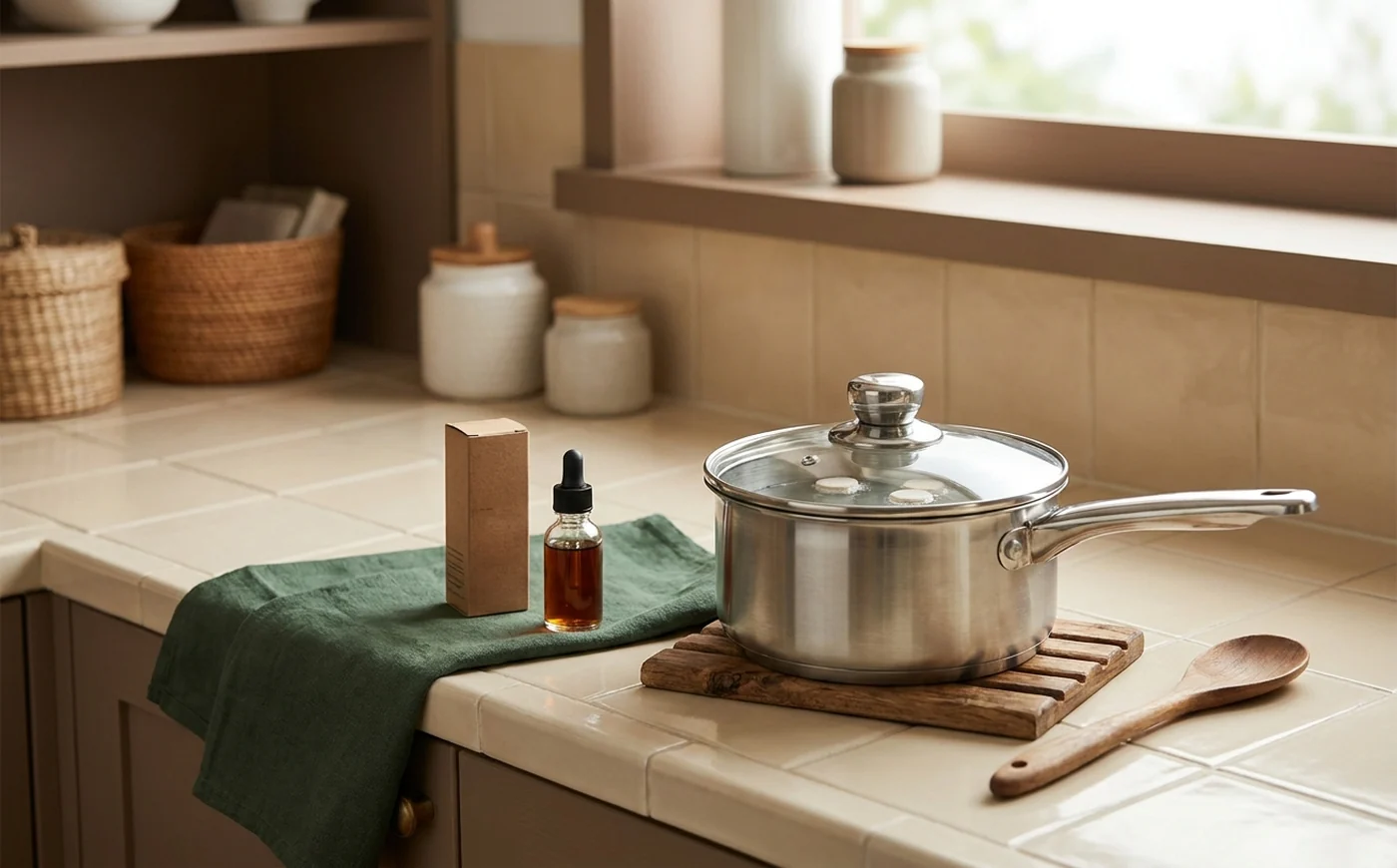
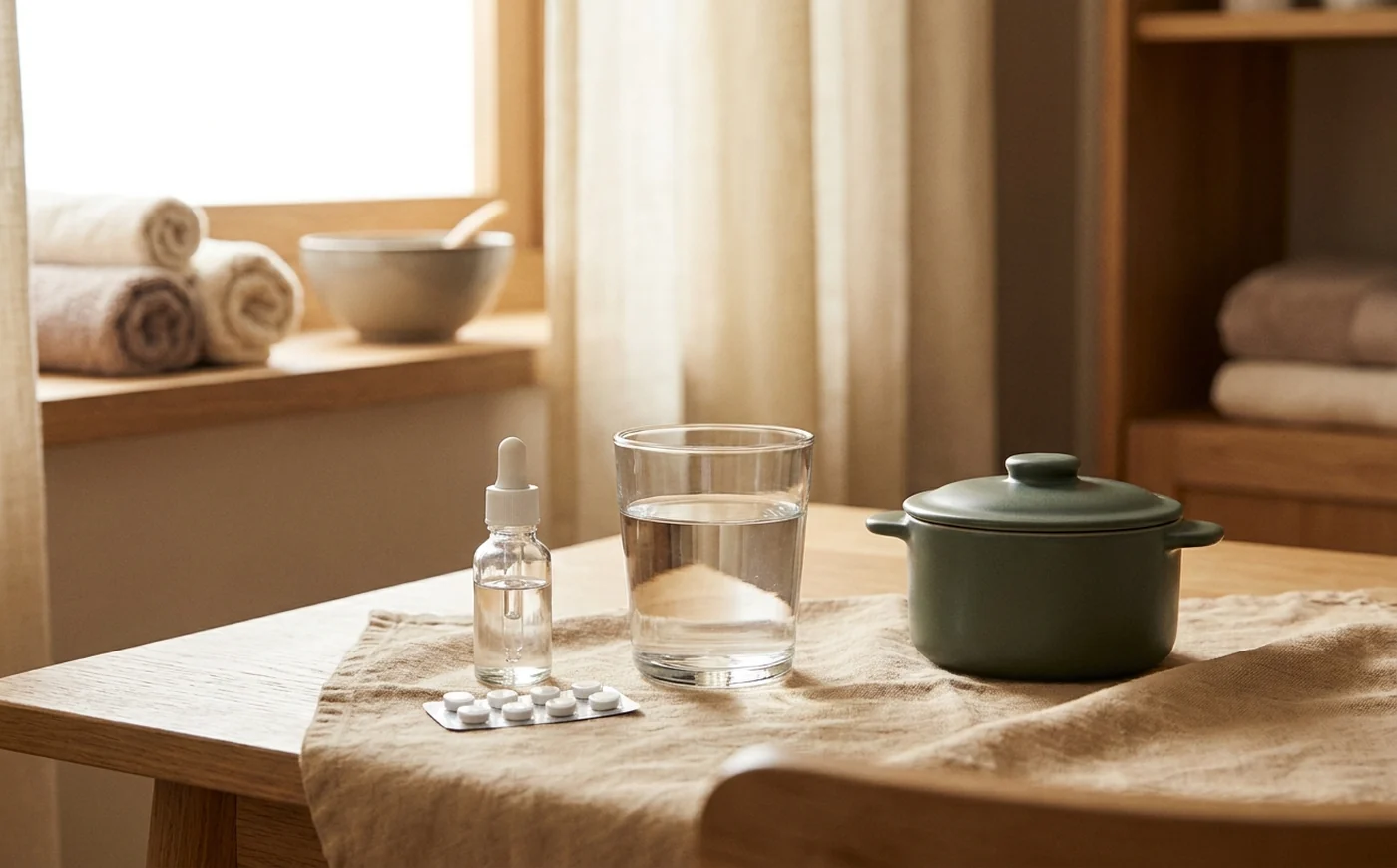
If water quality is uncertain, treatment guidance matters. Boiling is the strongest general emergency method for germs when safe to do. Chemical tablets or drops can be useful backups, but they have limits and instructions must be followed.
Best for
backup kits
evacuation bags
situations where boiling is not practical
Look for
expiration date
clear instructions
what the product is and is not meant to treat
local health guidance during advisories
The baseline
A simple planning number: one gallon per person per day.
Official emergency guidance commonly uses one gallon per person per day as a starting point for drinking and sanitation. The CDC recommends at least a 3-day supply and says to try for a 2-week supply if possible. The Red Cross also separates a 3-day evacuation supply from a 2-week home supply.
That does not mean every beginner has to solve two weeks perfectly today. It means your first purchase should be sized around real household math, not a random bottle or gadget.
Before you buy
Compare the job, not just the product.
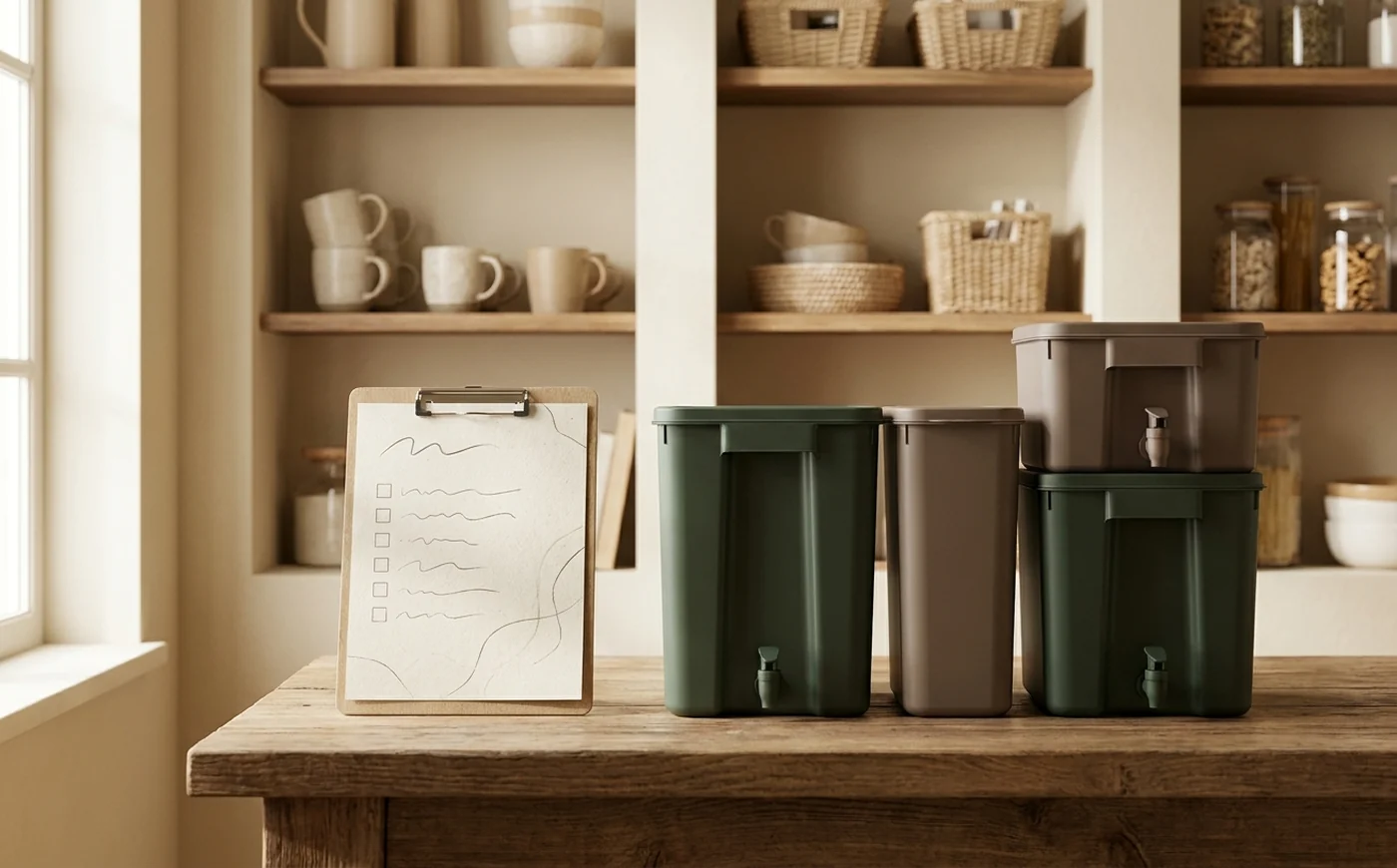
The right water basic depends on the job you need it to do. Use this checklist before comparing Amazon options later.
Water storage
Best when:
you want water ready immediately
you live in an apartment or small home
you are starting from zero
Check before buying:
food-grade material
tight cap or spigot
easy cleaning
manageable filled weight
where it will actually be stored
Avoid if: you are expecting it to improve questionable water quality — storage is not treatment.
Gravity or countertop filters
Best when:
you want a reusable household backup
you have counter/storage space
you will replace and maintain filters
Check before buying:
certified claims or clear reduction specs
absolute pore size where relevant
replacement filter cost and availability
flow rate
cleaning process
Avoid if: you need guaranteed treatment for a specific contaminant and the product does not clearly claim that exact reduction.
Purification or disinfection backup
Best when:
stored water may run low
boiling is not practical
you want a compact emergency layer
Check before buying:
expiration date
instructions and wait time
what organisms it targets
taste expectations
warnings for specific users
Avoid if: the water may contain fuel, toxic chemicals or radioactive material — boiling or disinfecting does not make that safe.
Start here
Choose based on your home, not on prepper gear lists.
If you are unsure, start with the most boring useful layer: stored water. Then add a filter or treatment backup based on your space and risk.
If you live in an apartment
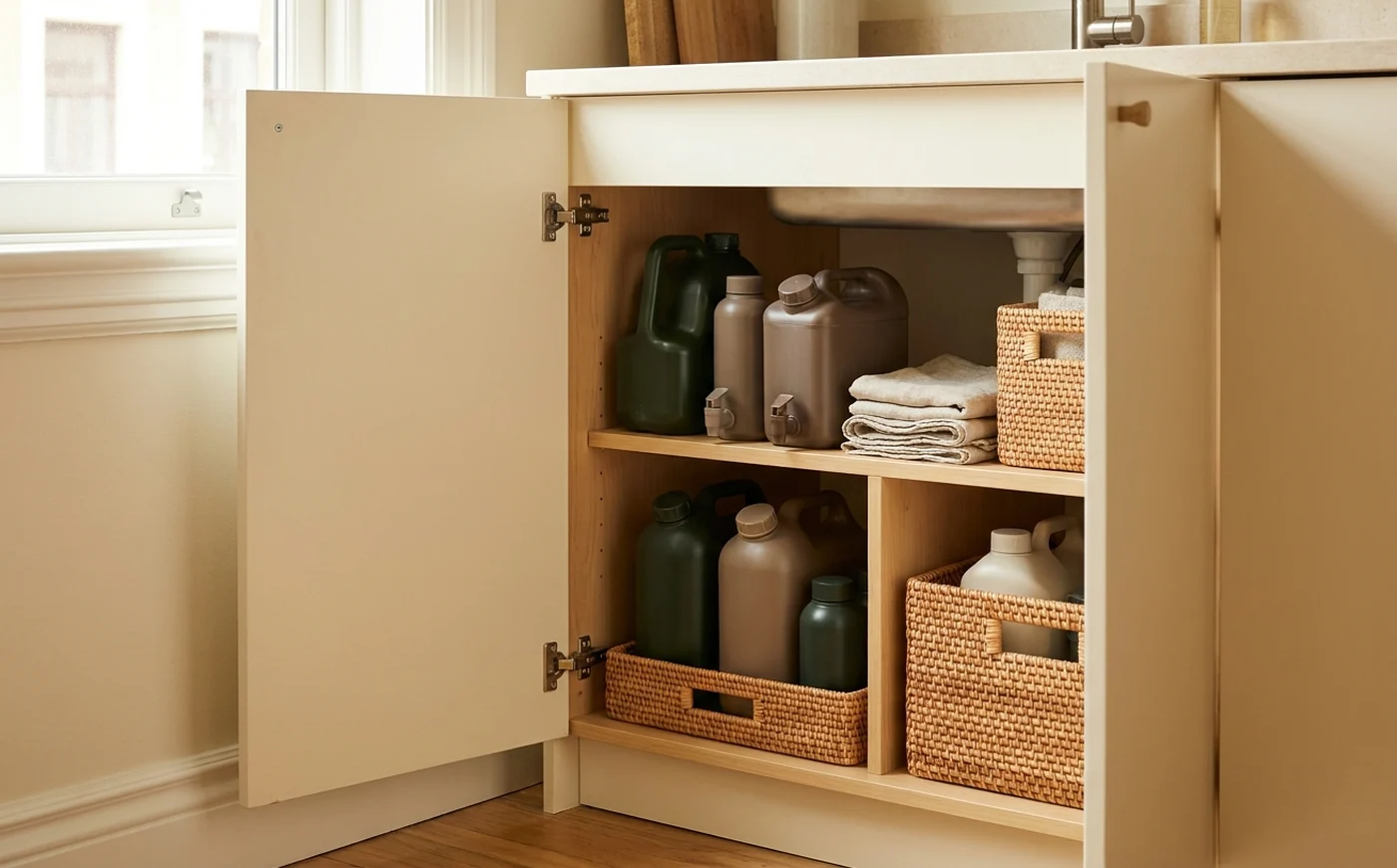
Start with compact stored water you can actually keep. A few manageable containers are better than one huge container you cannot move, clean or store.
A compact treatment backup or portable filter can help when you are away from home, but read instructions carefully and do not assume it handles every water problem.
These Amazon picks match the guide’s order: store clean water first, then add a filter, treatment backup or portable fallback only when it solves a clear job.
Affiliate disclosure: As an Amazon Associate, Self Reliance Daily earns from qualifying purchases. Product links below may be affiliate links. Availability, prices and listing details can change, so always check the current Amazon page before buying. The visuals are category illustrations, not exact Amazon product photos.
Durable first step
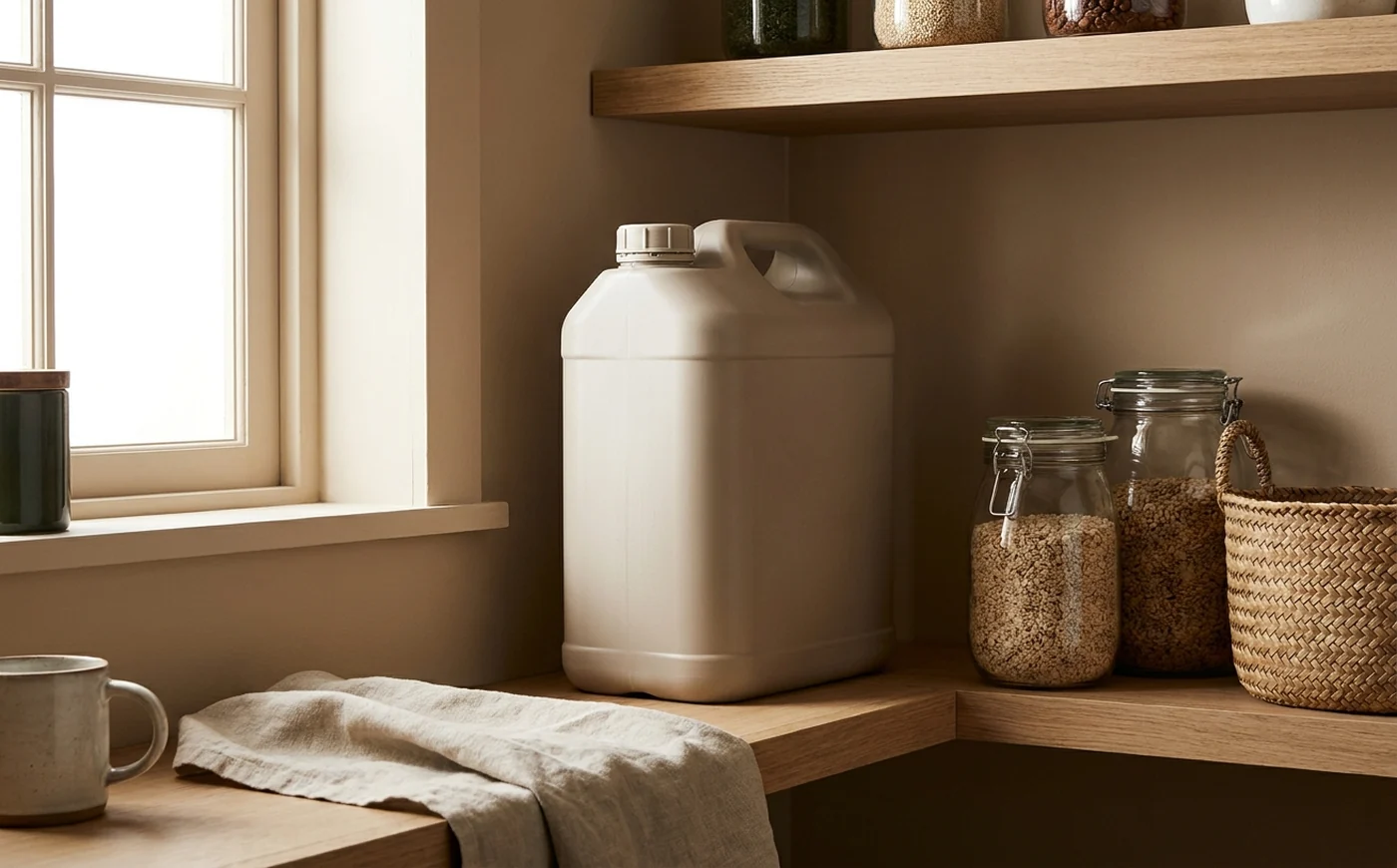
Scepter 5-gallon water storage jug
Best for: a household that wants one sturdy, manageable container before adding filters or tablets.
These picks are practical comparison starting points, not a guarantee that any product makes unsafe water safe. Follow product instructions and local health guidance during water advisories.
Safety note
A filter is not a magic safety guarantee.
Water problems are different. Sediment, taste, bacteria, viruses, parasites and chemical contamination are not the same thing. A product that helps with one issue may not help with another.
Follow local health guidance during water advisories. If water may contain fuel, toxic chemicals or radioactive material, do not rely on boiling or disinfecting to make it safe. Use bottled water or another safe source and follow official advice.
This page is general household preparedness education, not medical advice or a guarantee that any product makes unsafe water safe.
Sources used for this guide
This guide was written from official emergency preparedness and water safety guidance, then simplified for beginner household planning.