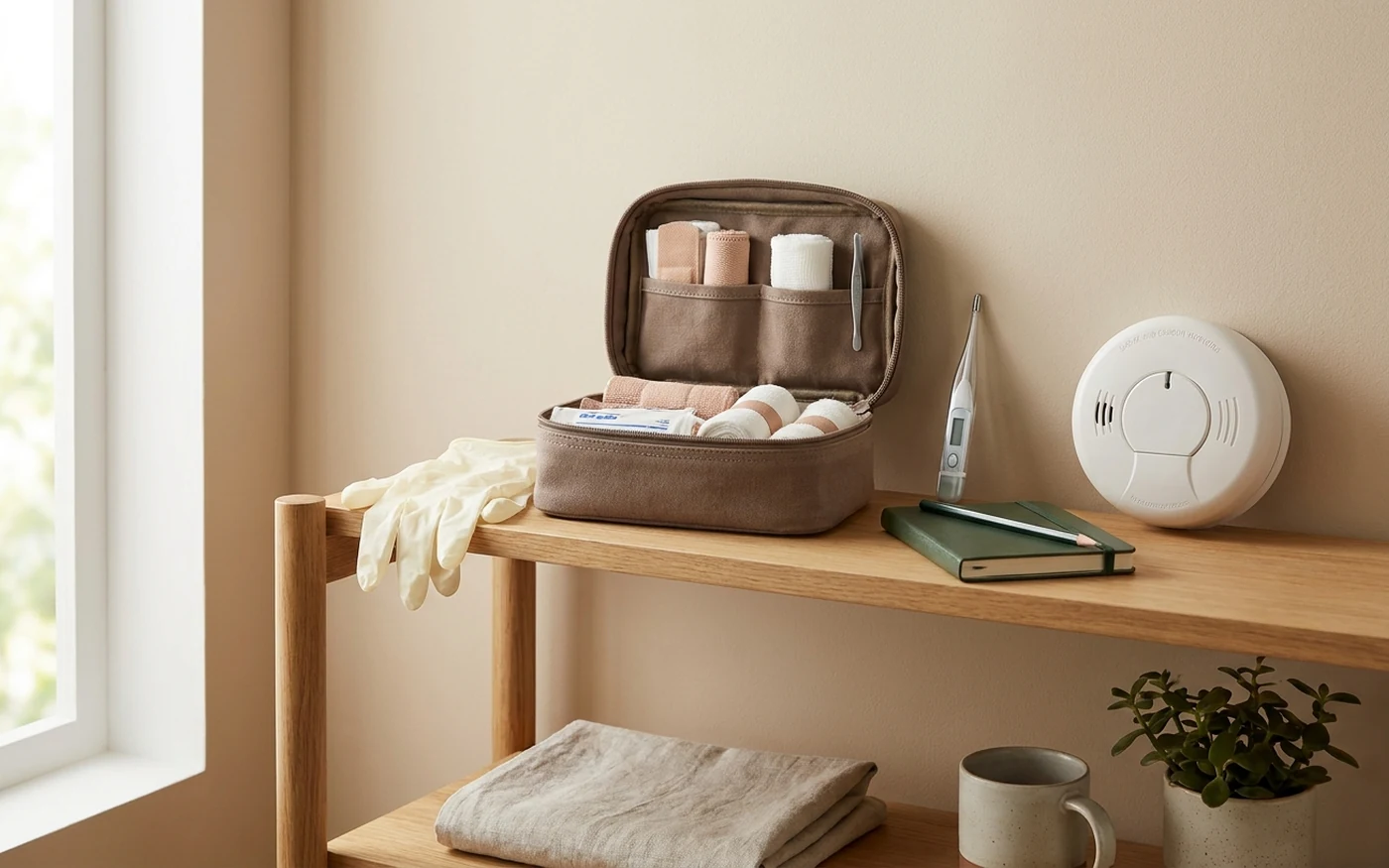
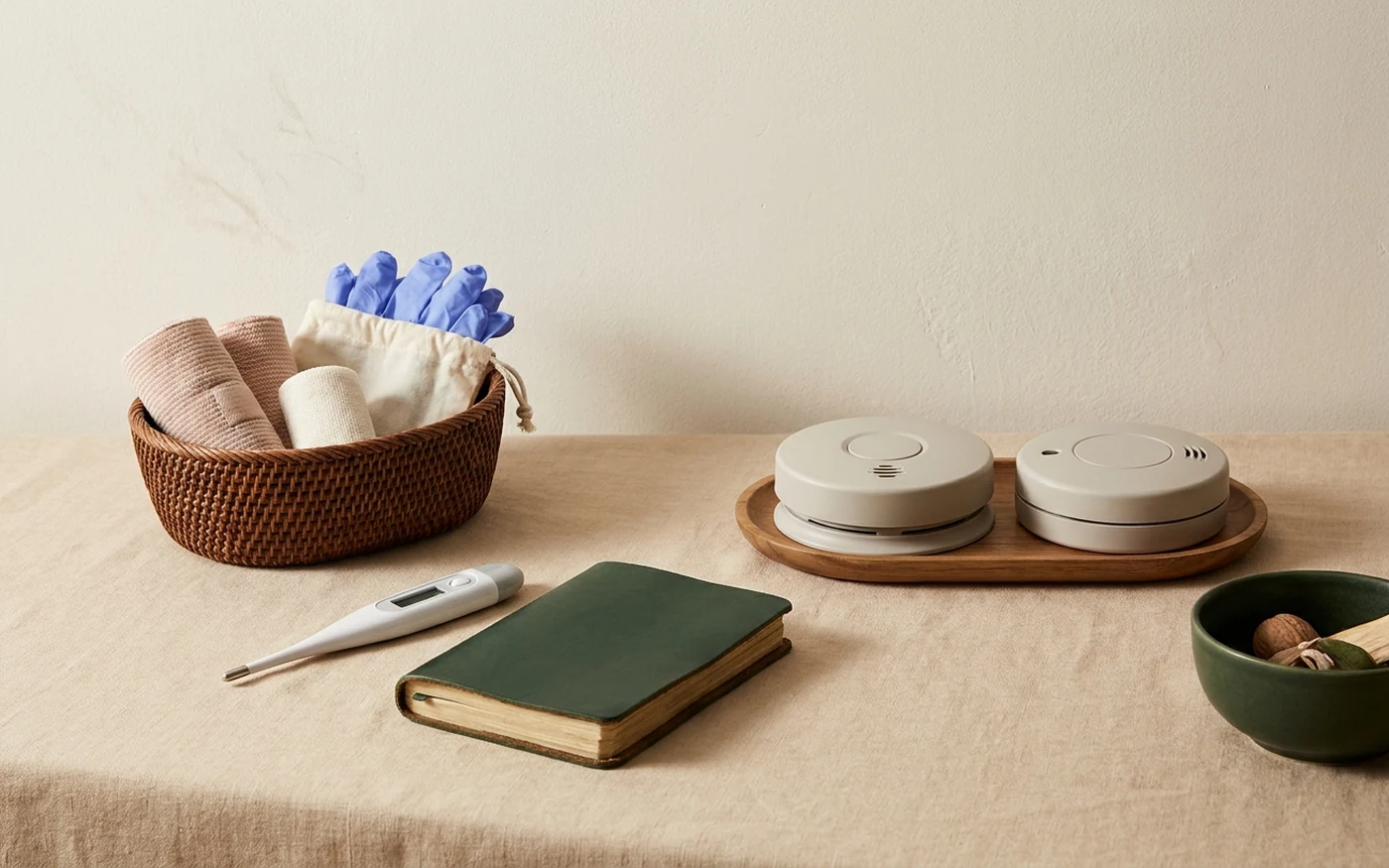
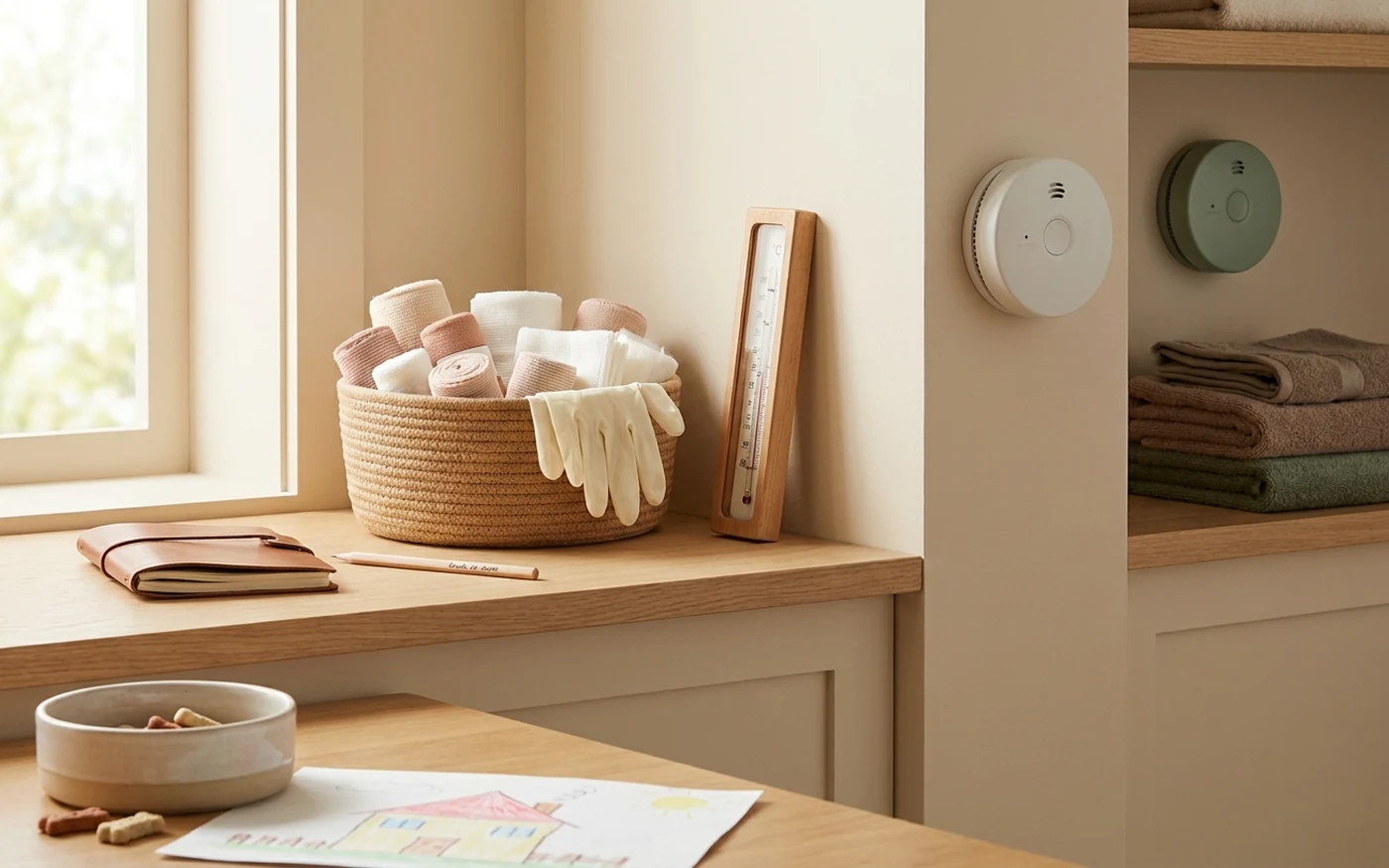
A home safety kit should be easy to find before anyone is stressed.
Start with a simple first aid kit, personal medical notes, emergency contacts and basic home safety items. The goal is not to play doctor — it is to handle small problems and know when to get help.
Put the basics where people can actually find them.
The common mistake
Most people buy a first aid kit and never customize it.
A pre-made kit is a good start, but it cannot know your household. It does not know your allergies, prescriptions, glasses, baby supplies, pet needs or emergency contacts.
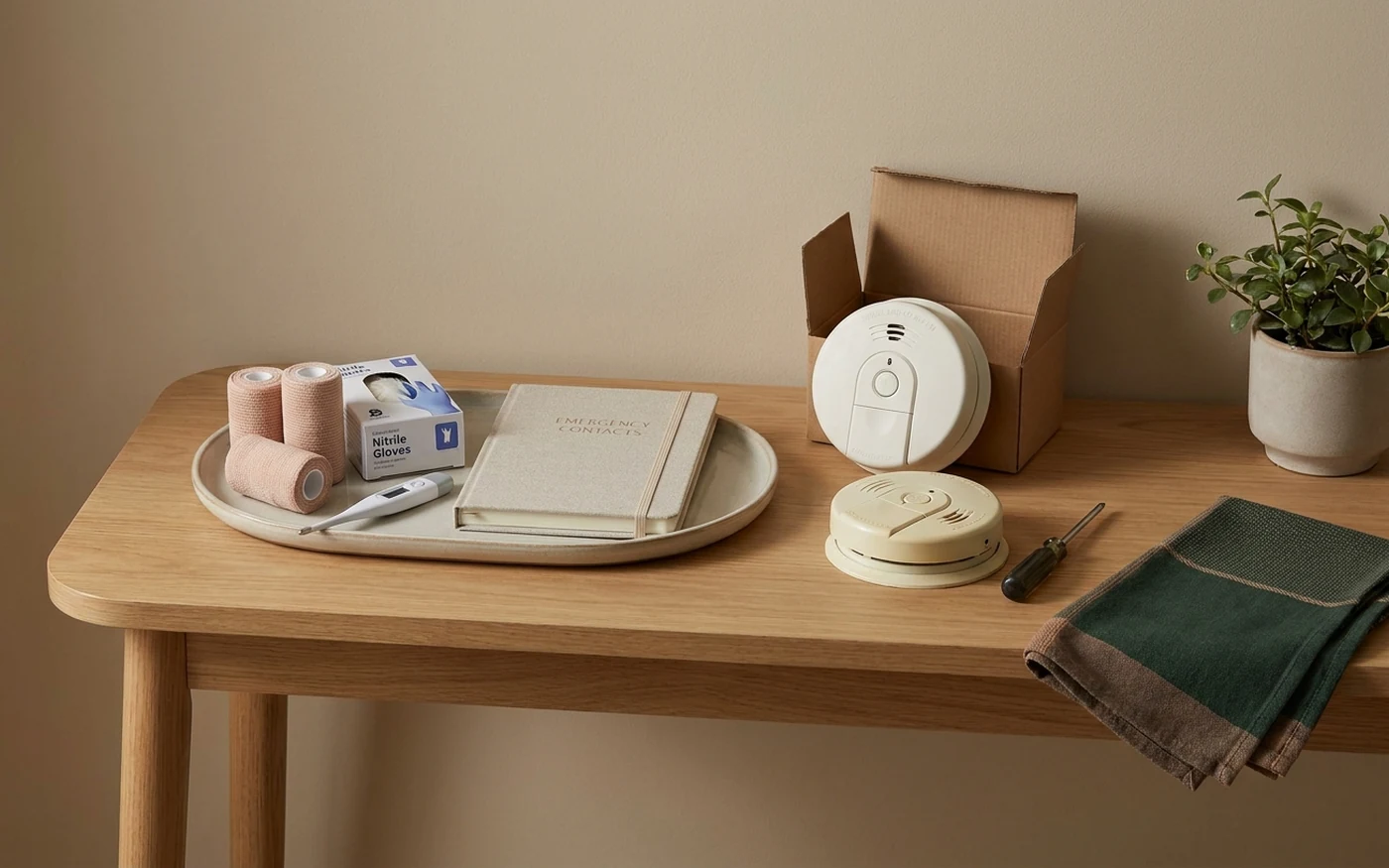
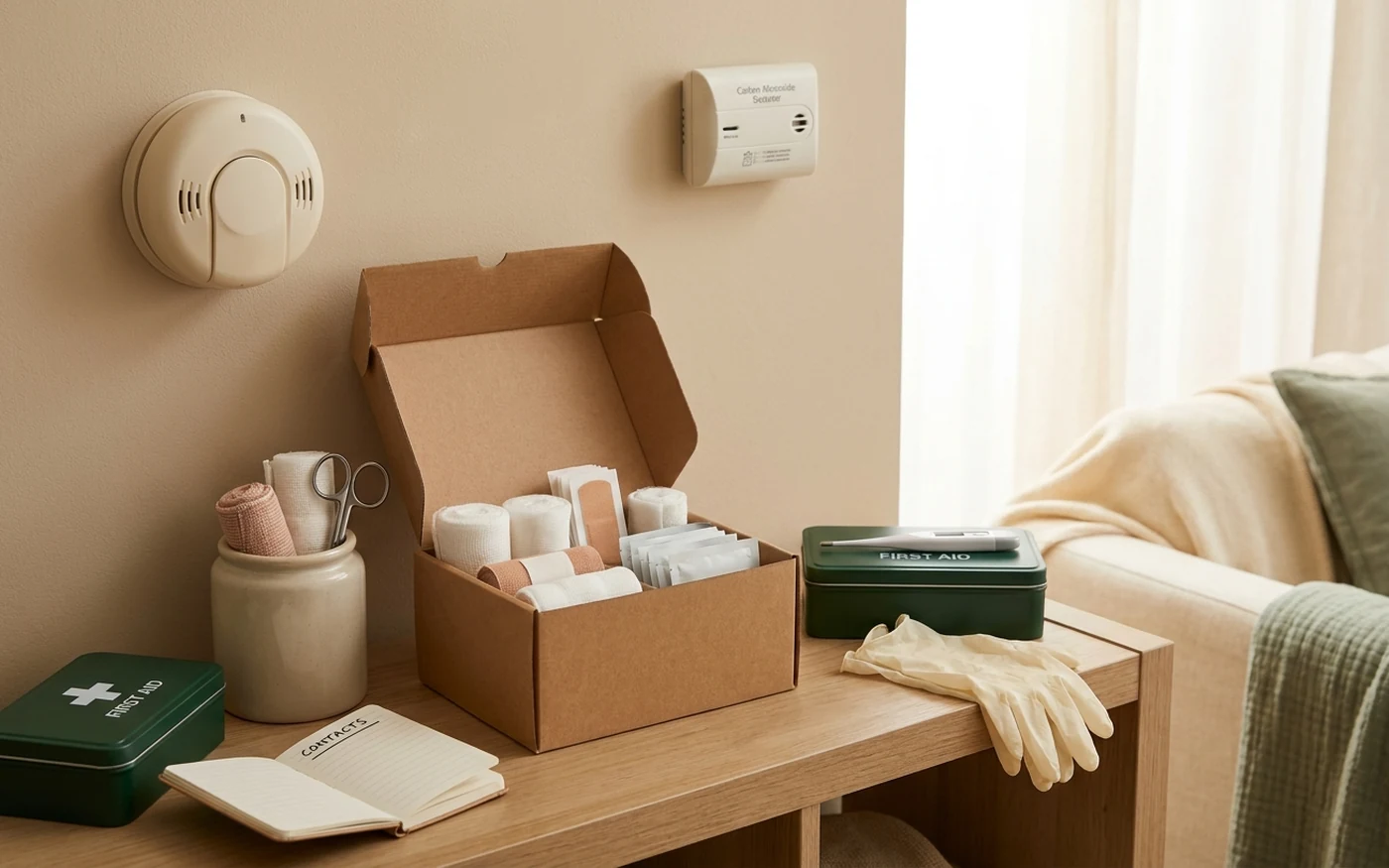
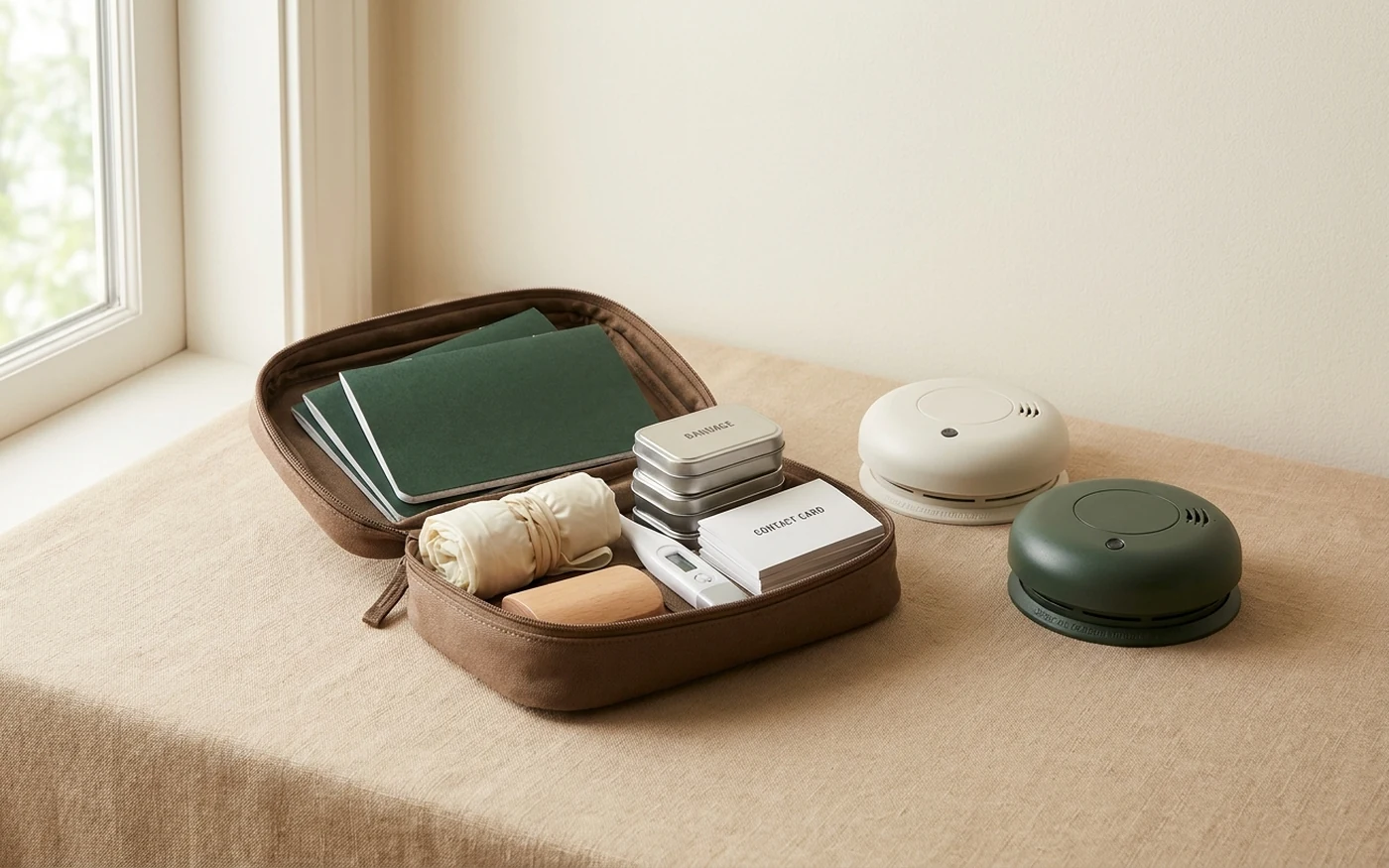
The better first step is a visible home safety station: basic first aid supplies, personal medical notes, emergency contacts and the safety items that help you avoid bigger problems.
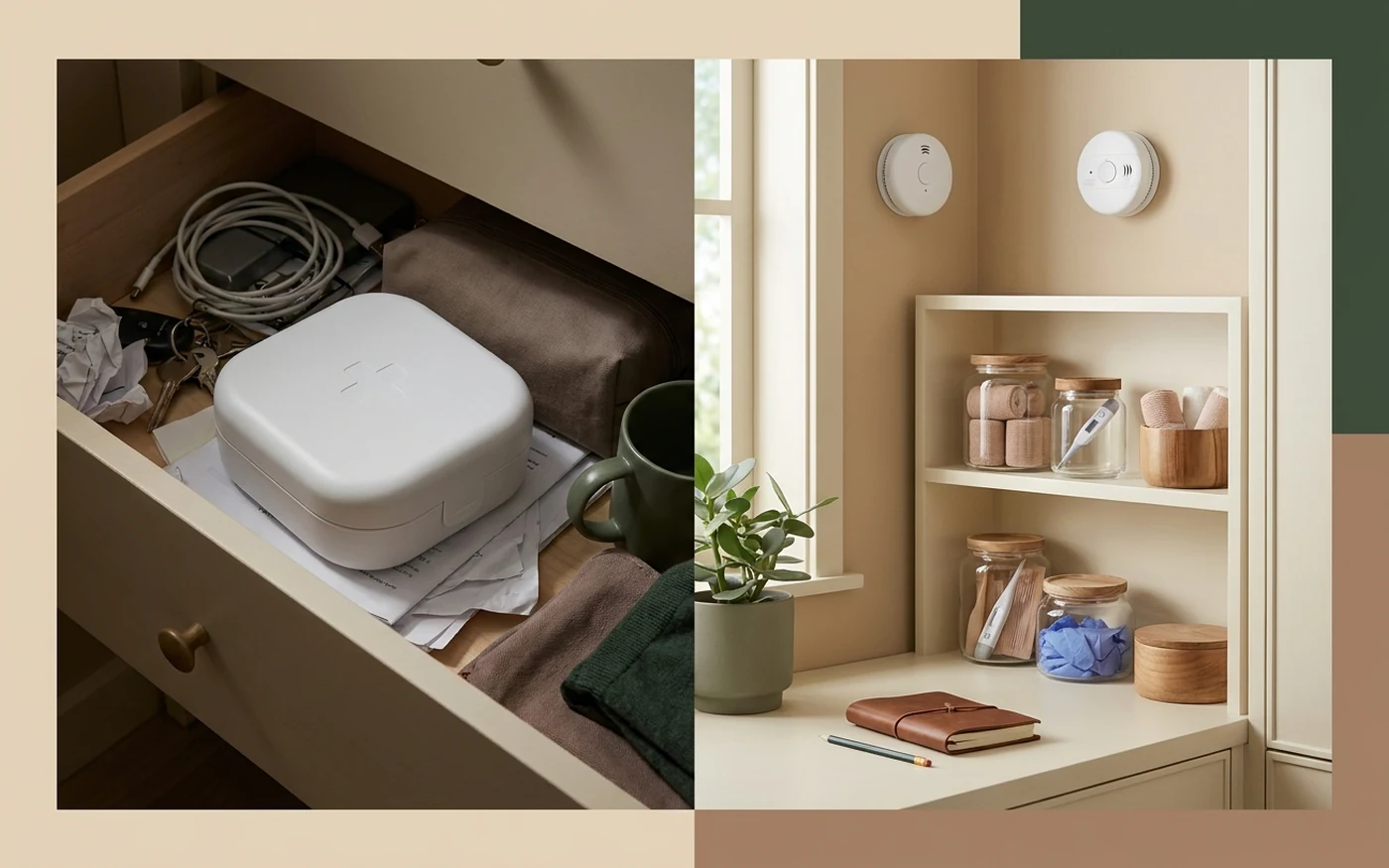
Bought but forgottenReady and customized
A first aid kit is not enough by itself. Make it visible, personal and easy to use under stress.
False start
I bought a kit and left it in a drawer without personal notes or contacts.
Better first step
I built a visible safety station with supplies, personal info and prevention basics.
The simple order
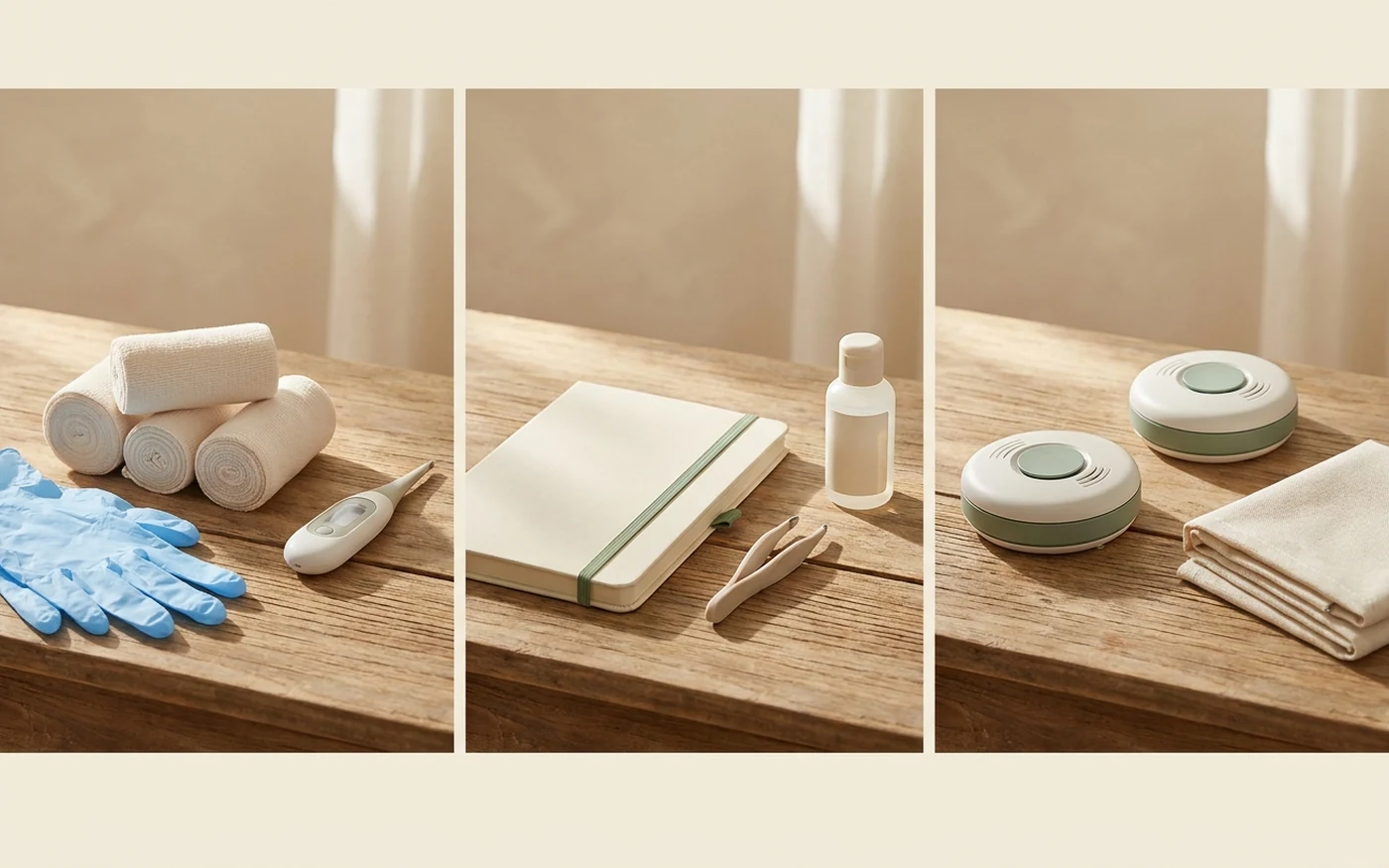
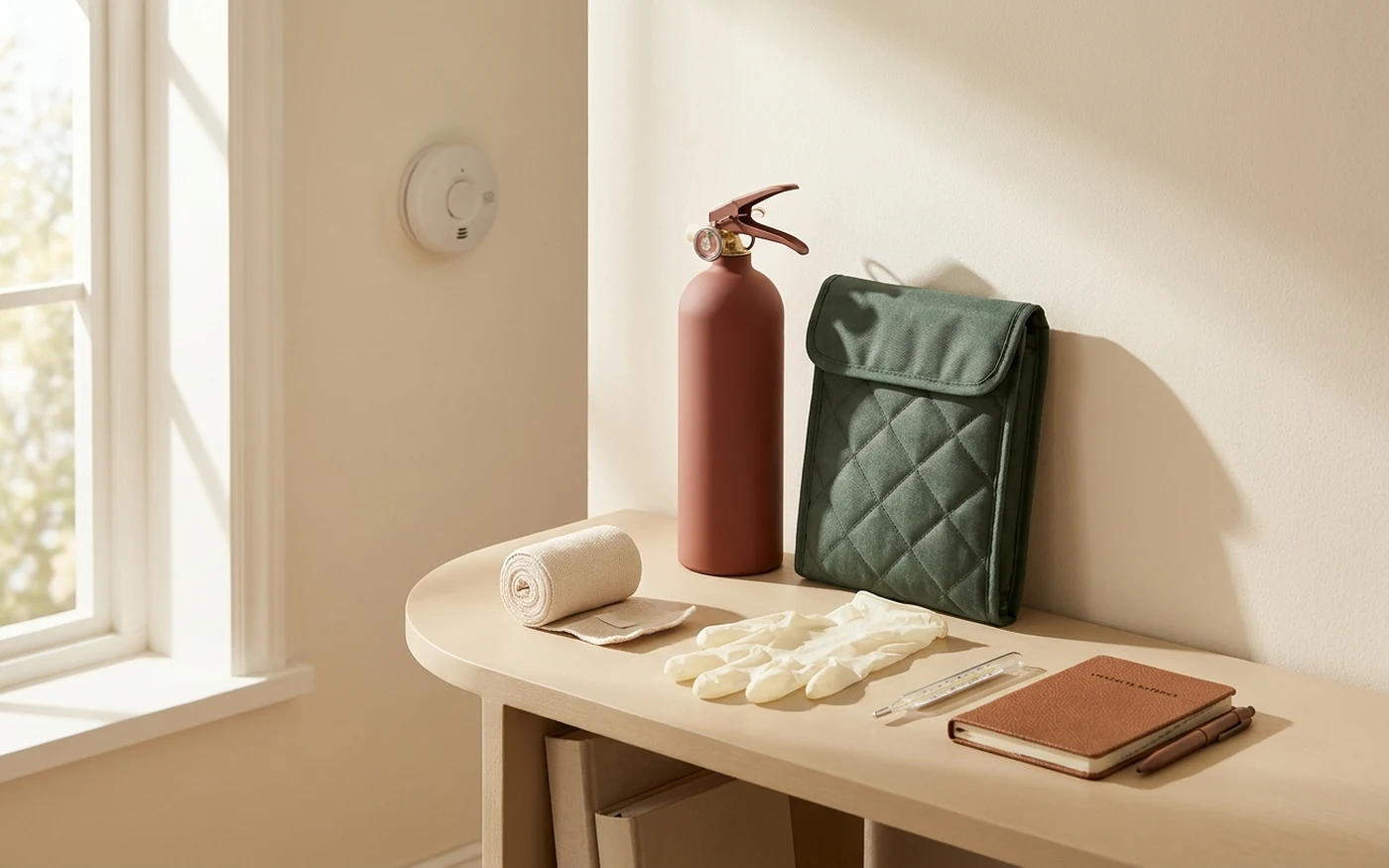
Use the three-layer safety plan: treat, personalize, prevent.
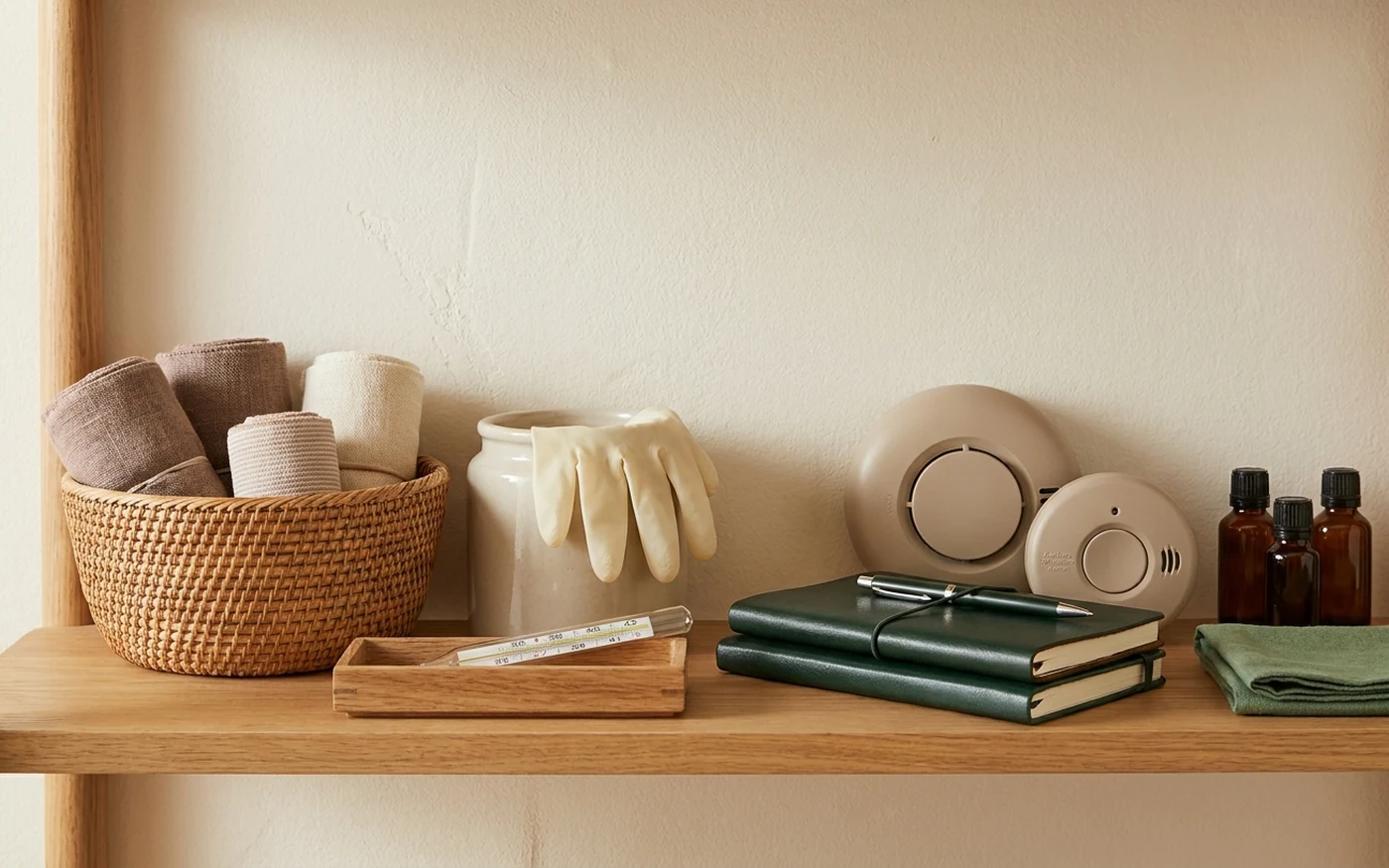
A practical home setup should handle minor injuries, reflect your household and reduce preventable hazards.
Bandages, gauze, antiseptic wipes, gloves, tweezers, cold pack and basic tools help with small cuts, scrapes and common household moments.
Best for
small cuts and scrapes
splinters
common household moments
Look for
bandage variety
gauze and tape
gloves
tweezers/scissors
clear case organization
Layer 2
Personalize the kit
Add medications, allergy info, emergency contacts, glasses/contacts, baby/pet items and anything your healthcare provider recommends.
Best for
daily medications
allergy notes
caregiver handoffs
Look for
medication storage
contact card
health notes
room for personal items
Layer 3
Prevent bigger danger
Smoke alarms, carbon monoxide alarms, flashlight access and fire-safety basics help reduce risk before a situation becomes worse.
Best for
household hazard reduction
nighttime access
basic fire/CO safety
Look for
smoke alarm
carbon monoxide alarm
flashlight access
fire-safety basics
Visible station
Put the basics where people can actually find them.
A useful kit is not buried behind holiday decorations. Choose one visible, dry, easy-to-reach location. Add a small card with emergency contacts, allergies, medications and local urgent numbers. Check expiration dates twice a year.
Before you buy
Compare the job, not just the product.
Compare first aid and safety products by the job they perform in your home, not by piece count or tactical appearance.
Basic first aid kit
Best when:
small cuts, scrapes, splinters and everyday household incidents.
Check before buying:
bandage variety
gauze
tape
gloves
antiseptic wipes
tweezers/scissors
clear case organization
Avoid if: assuming piece count means quality.
Personal medical add-ons
Best when:
household-specific needs that no generic kit can predict.
Check before buying:
medication storage
allergy card
emergency contact card
extra glasses/contacts
baby/pet supplies if relevant
Avoid if: leaving prescriptions or expired medicine unchecked.
Home safety basics
Best when:
preventing bigger hazards.
Check before buying:
smoke alarm
carbon monoxide alarm
fire extinguisher basics
flashlight access
Avoid if: hiding safety tools where nobody can find them.
Start here
Choose based on your household, not a generic checklist.
The safest first step is the one that reflects who lives in the home and what they need during a stressful moment.
If you have no kit at all
Start with a basic first aid kit and add emergency contacts the same day.
Simple first aid and safety basics worth comparing next.
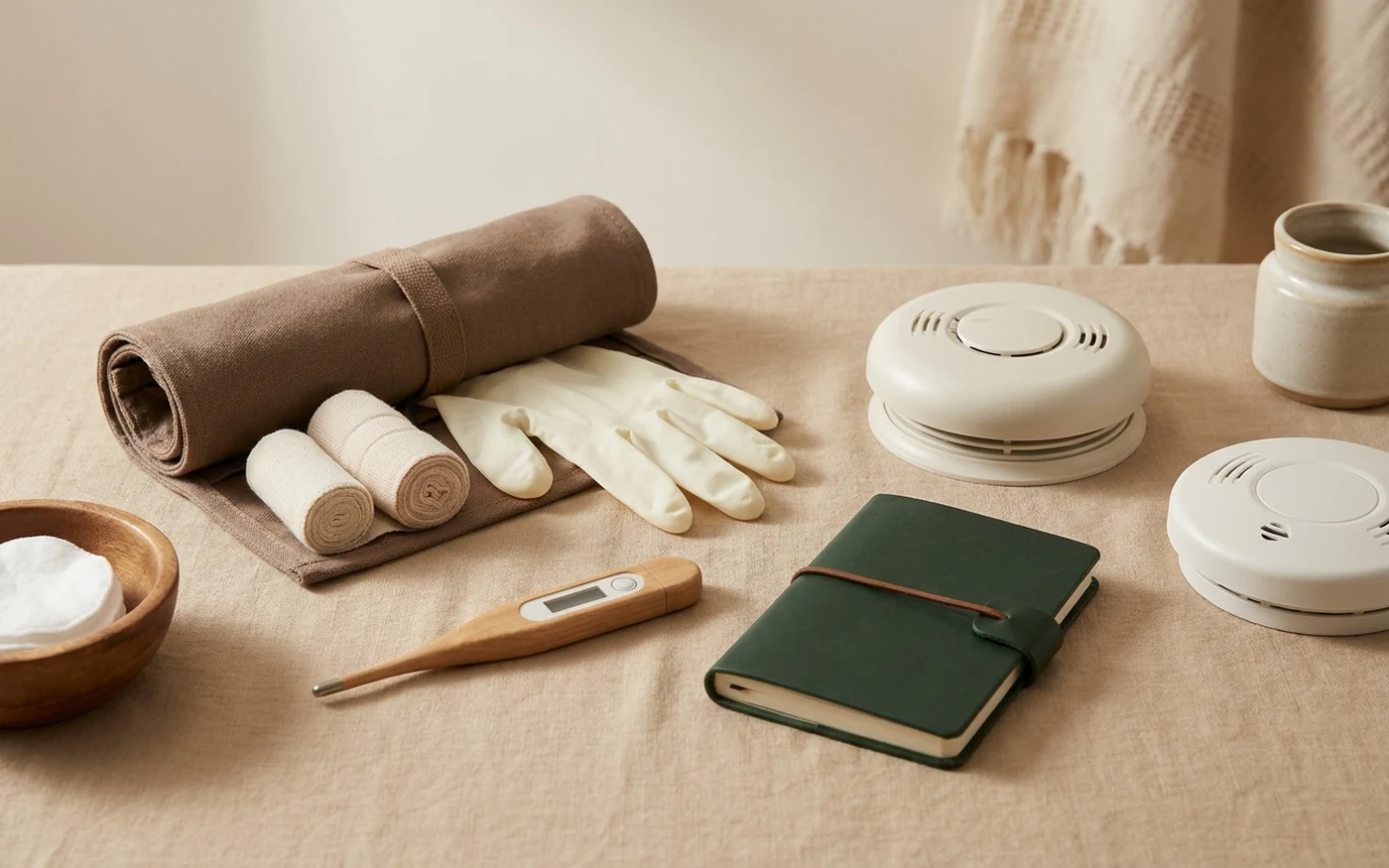
These Amazon picks keep the home-safety sequence practical: a visible kit, refill supplies, household-specific medical info, alarms and a cautious fire-safety layer.
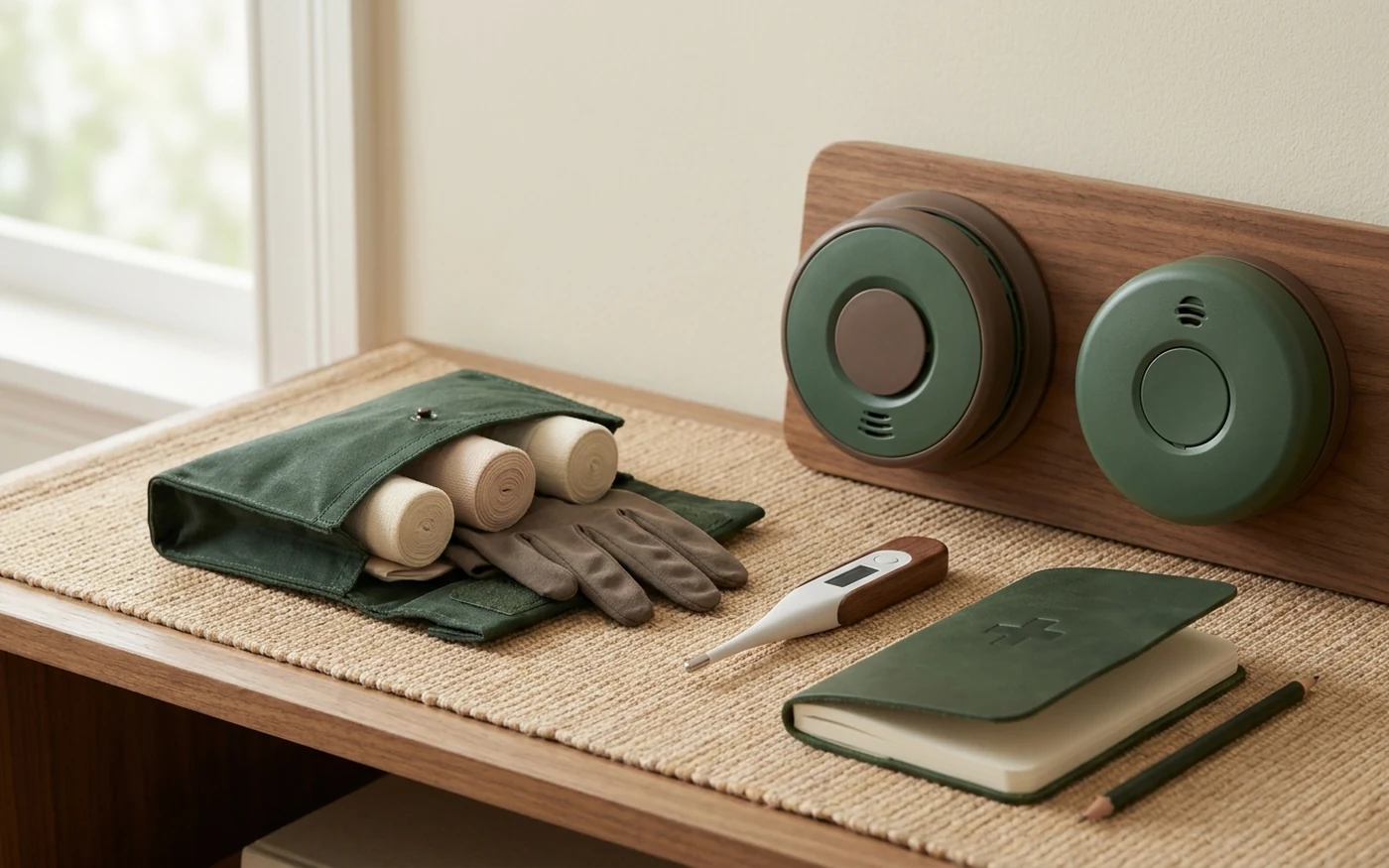
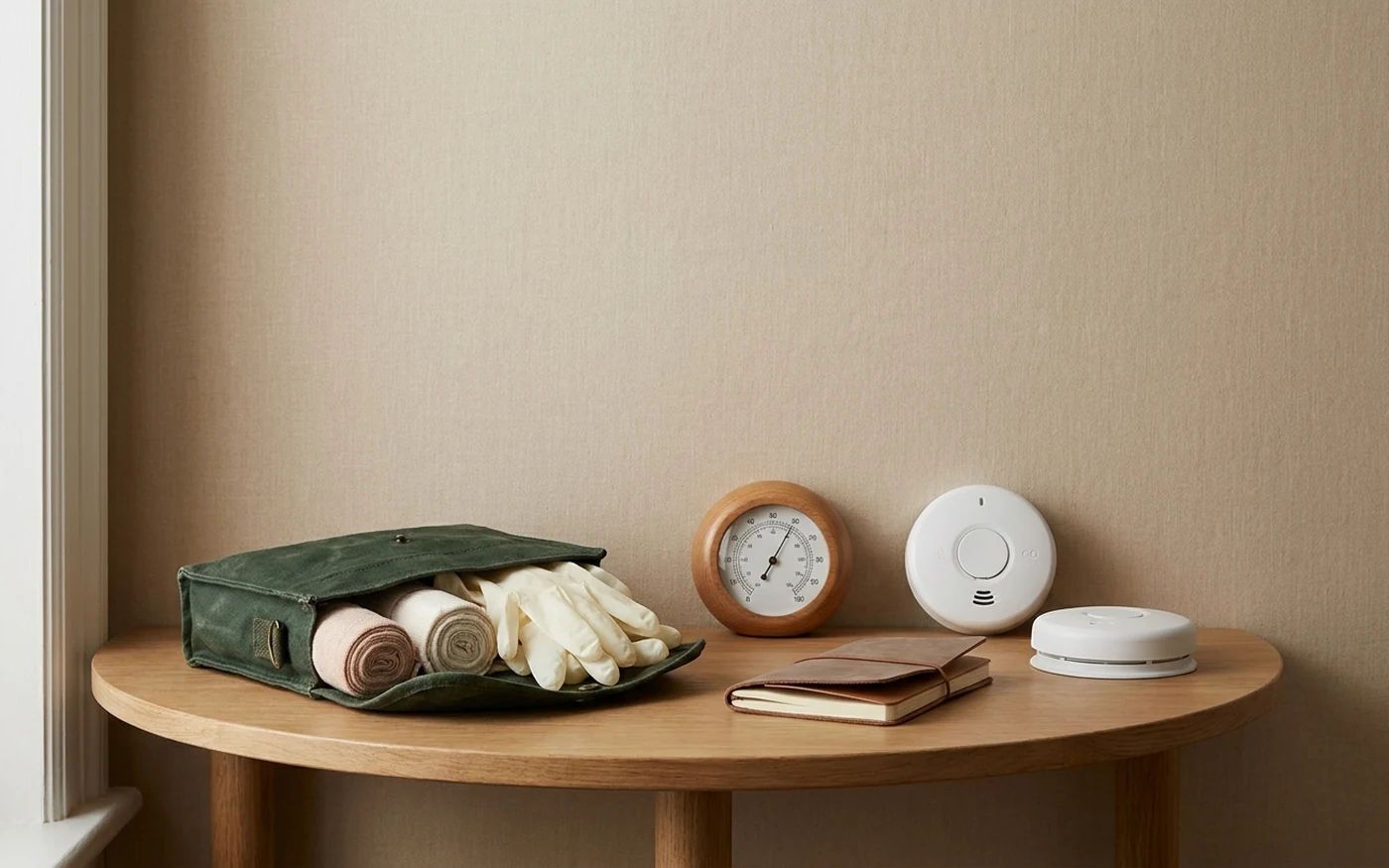
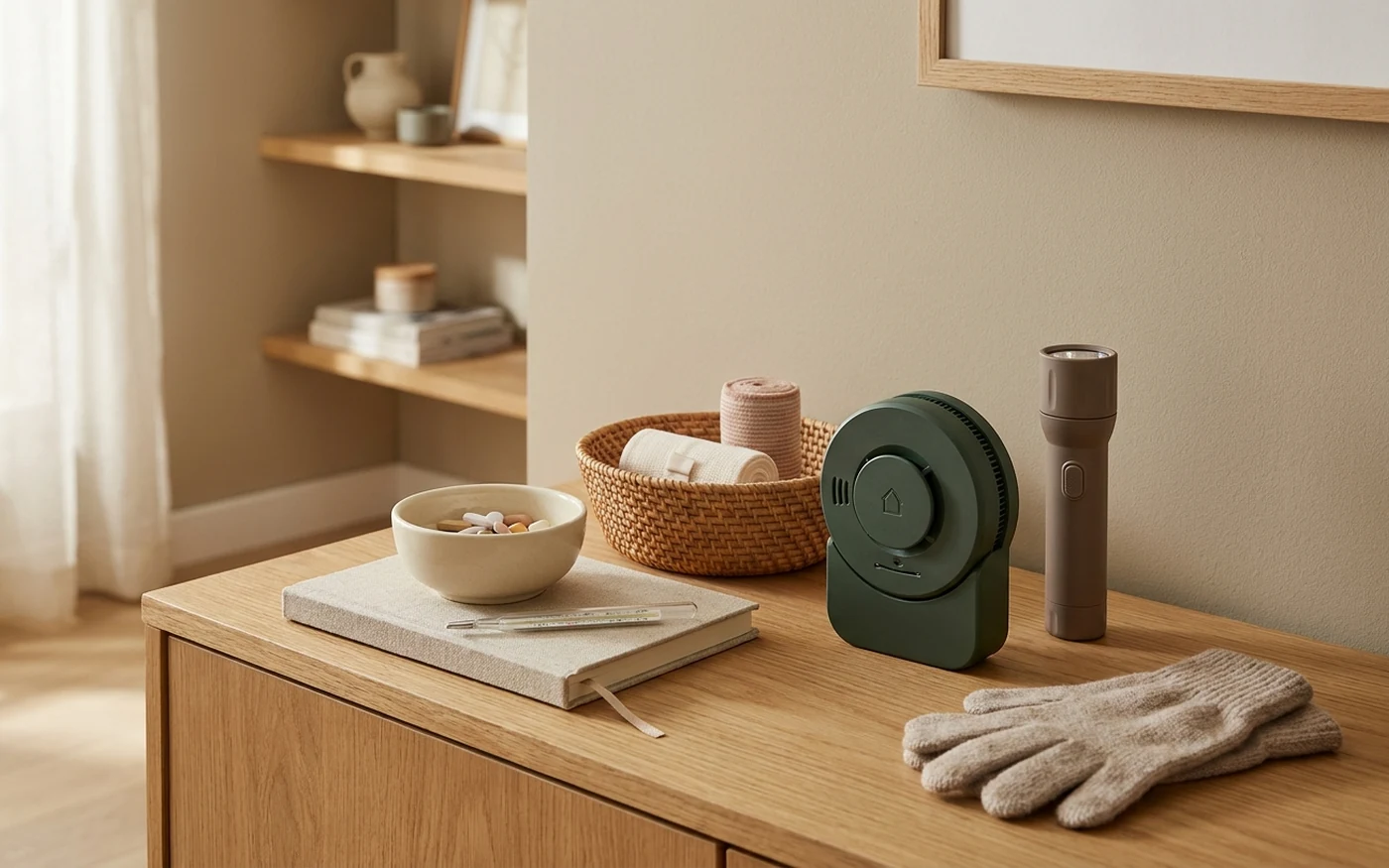
Affiliate disclosure: As an Amazon Associate, Self Reliance Daily earns from qualifying purchases. Product links below may be affiliate links. Availability, prices and listing details can change, so always check the current Amazon page before buying. The visuals are category illustrations, not exact Amazon product photos.
First kit
First Aid Only 299-piece all-purpose kit
Best for: creating a visible starting point for minor household cuts, scrapes and common moments.
First aid note: supplies do not replace training, medical advice or emergency care. For serious symptoms, medication planning or powered medical needs, follow professional guidance.
Safety note
First aid supplies do not replace emergency care.
A home kit helps with minor injuries and urgent organization. For serious symptoms, severe bleeding, breathing problems, poisoning, burns, chest pain or anything you are unsure about, seek emergency help. If you use medical devices or prescription medications, ask a healthcare provider what should be in your household plan.
Sources used for this guide
American Red Cross, Ready.gov, Mayo Clinic, MedlinePlus, CDC emergency preparedness and Red Cross home fire safety guidance shaped this guide.
American Red Cross
Ready.gov
Mayo Clinic
MedlinePlus, CDC emergency preparedness and Red Cross home fire safety guidance
Next: build the rest of your starter kit slowly.
First aid is one layer. Build the rest of the starter kit slowly: water, food storage, power and backyard basics.