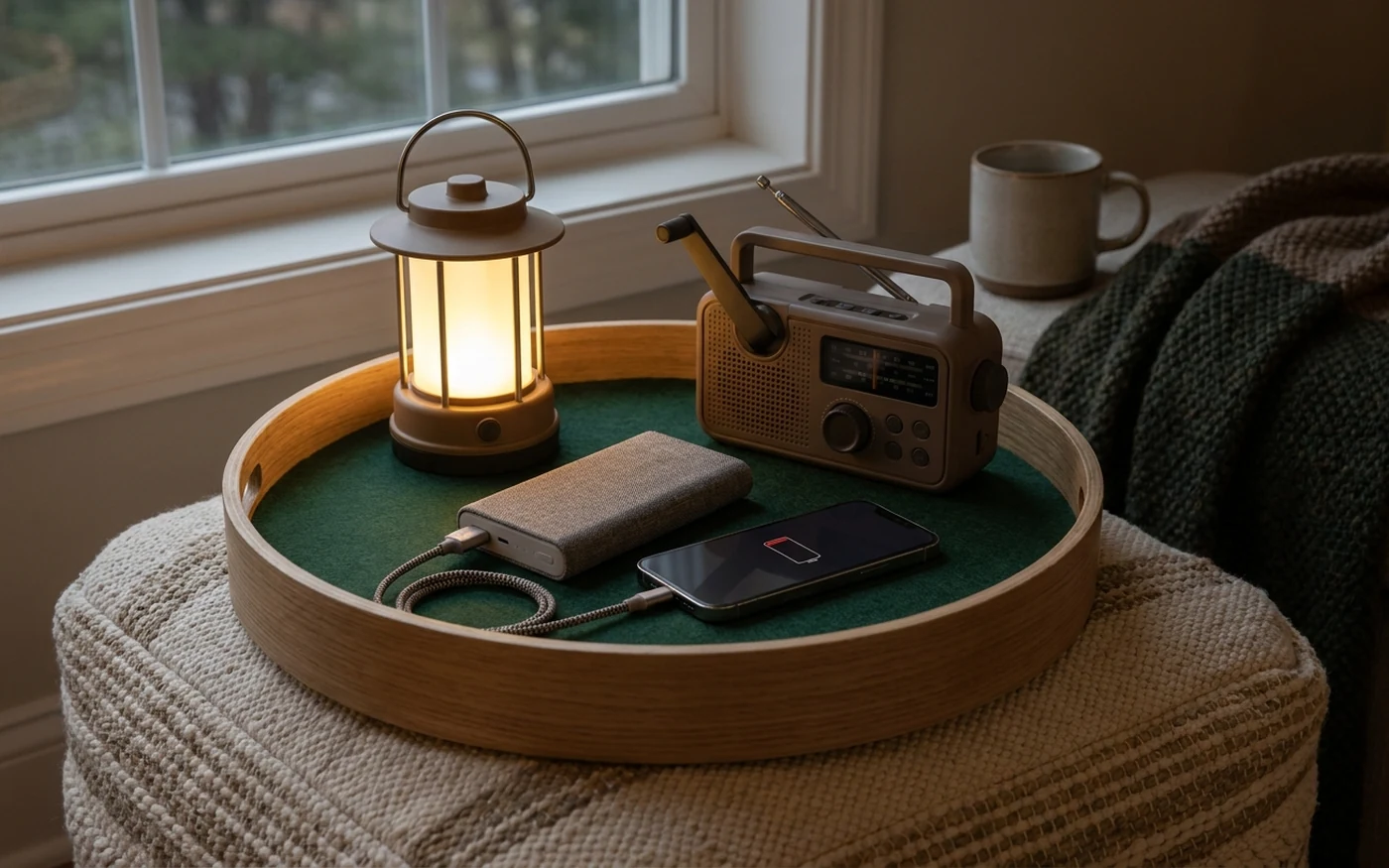
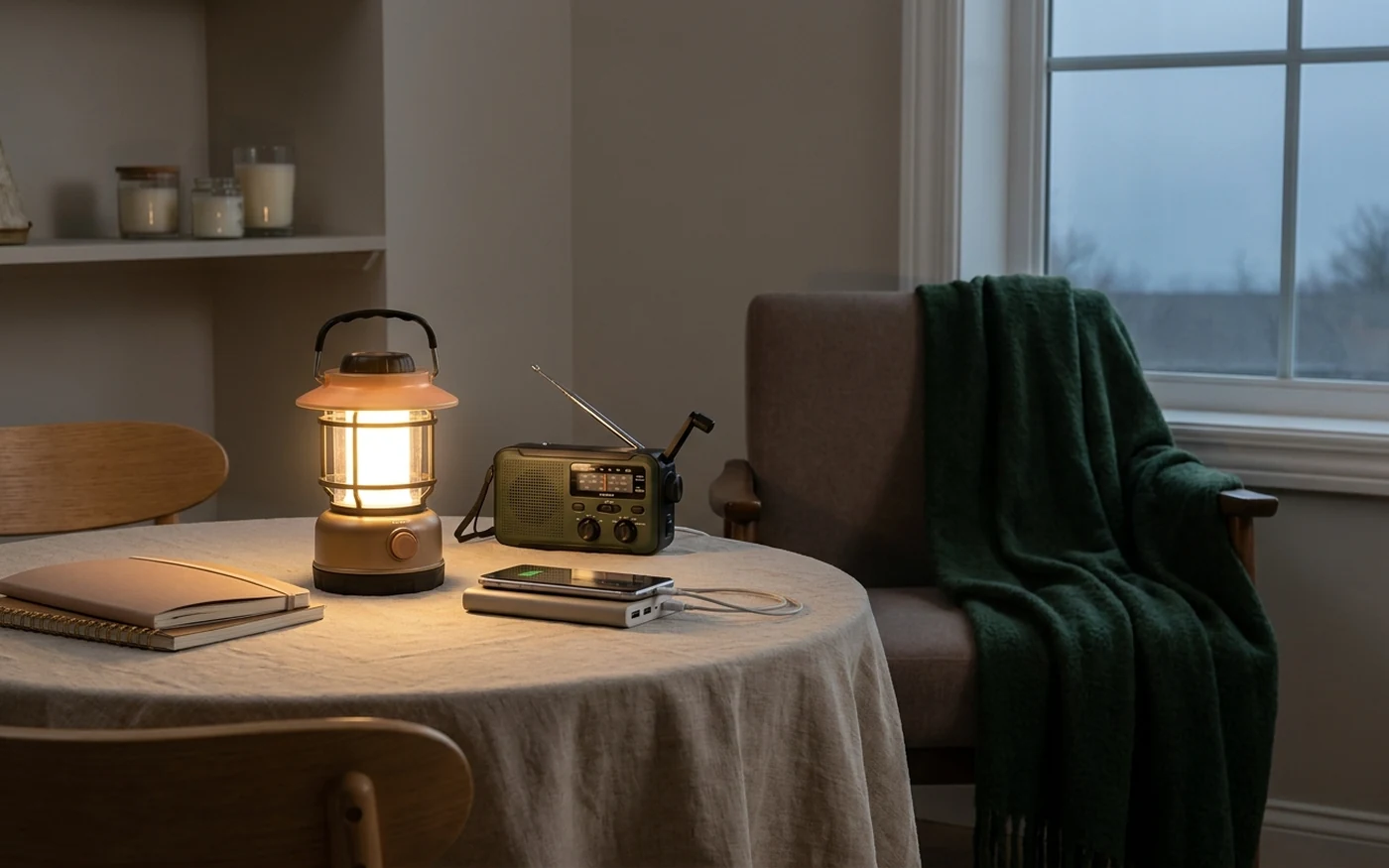
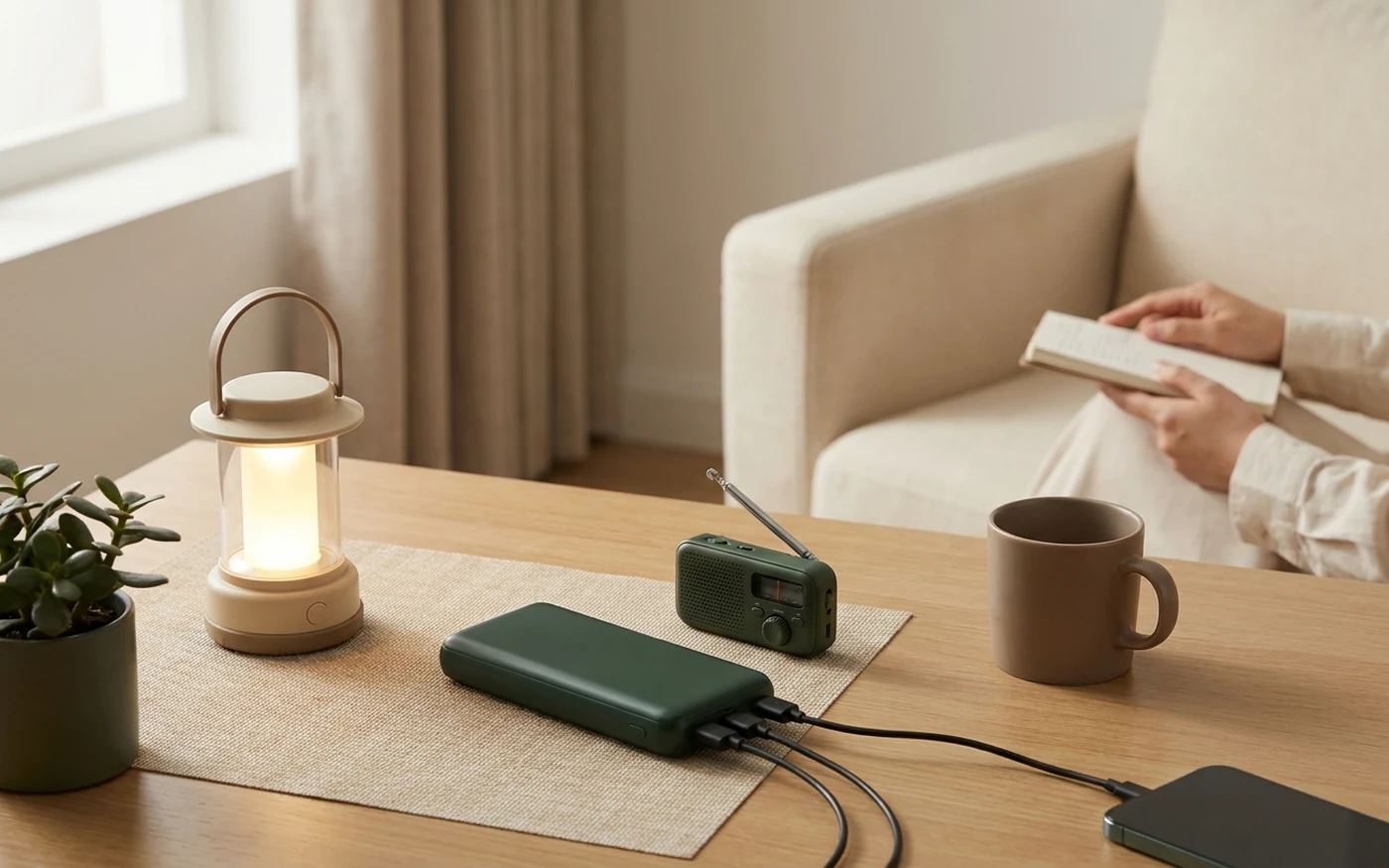
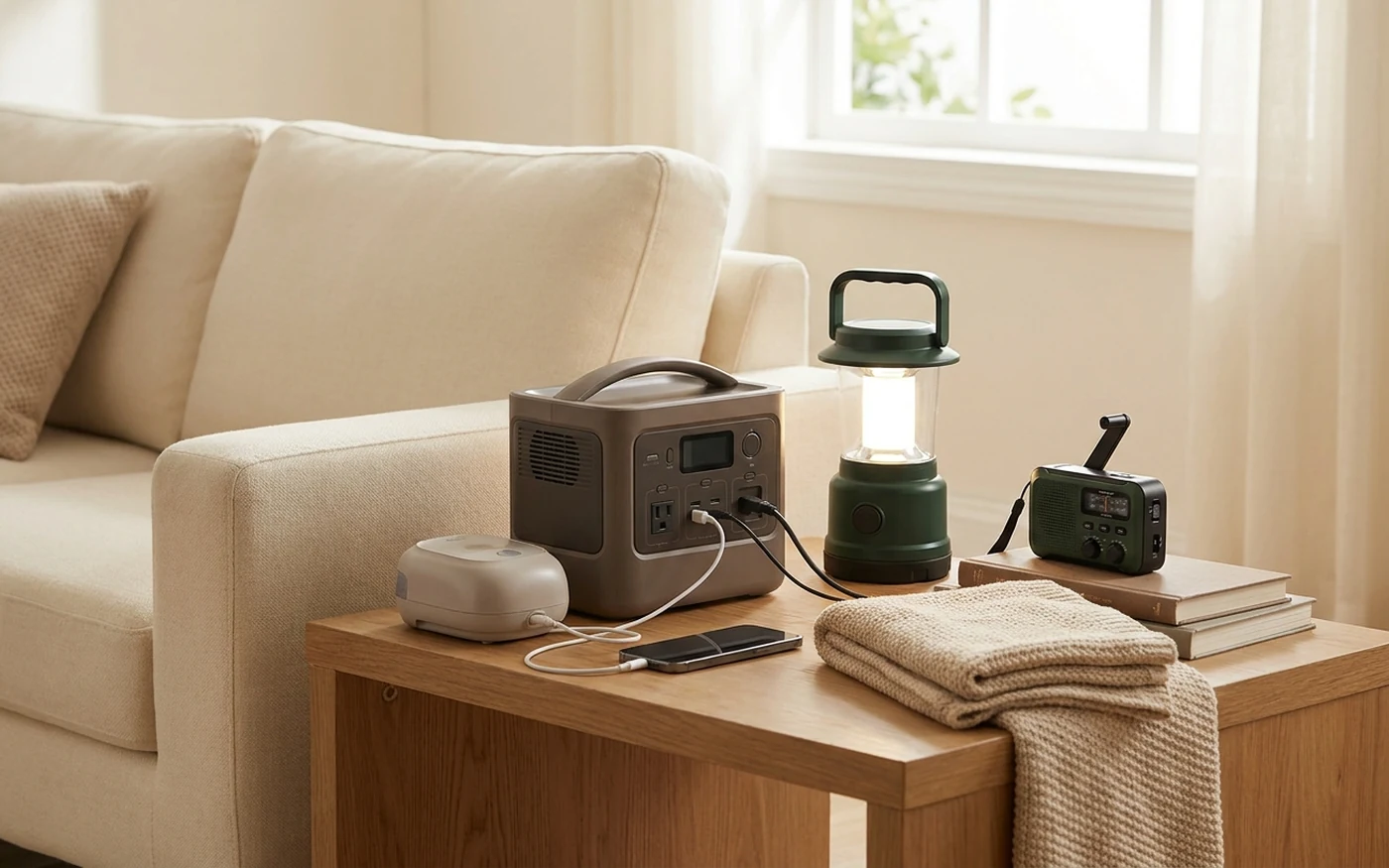
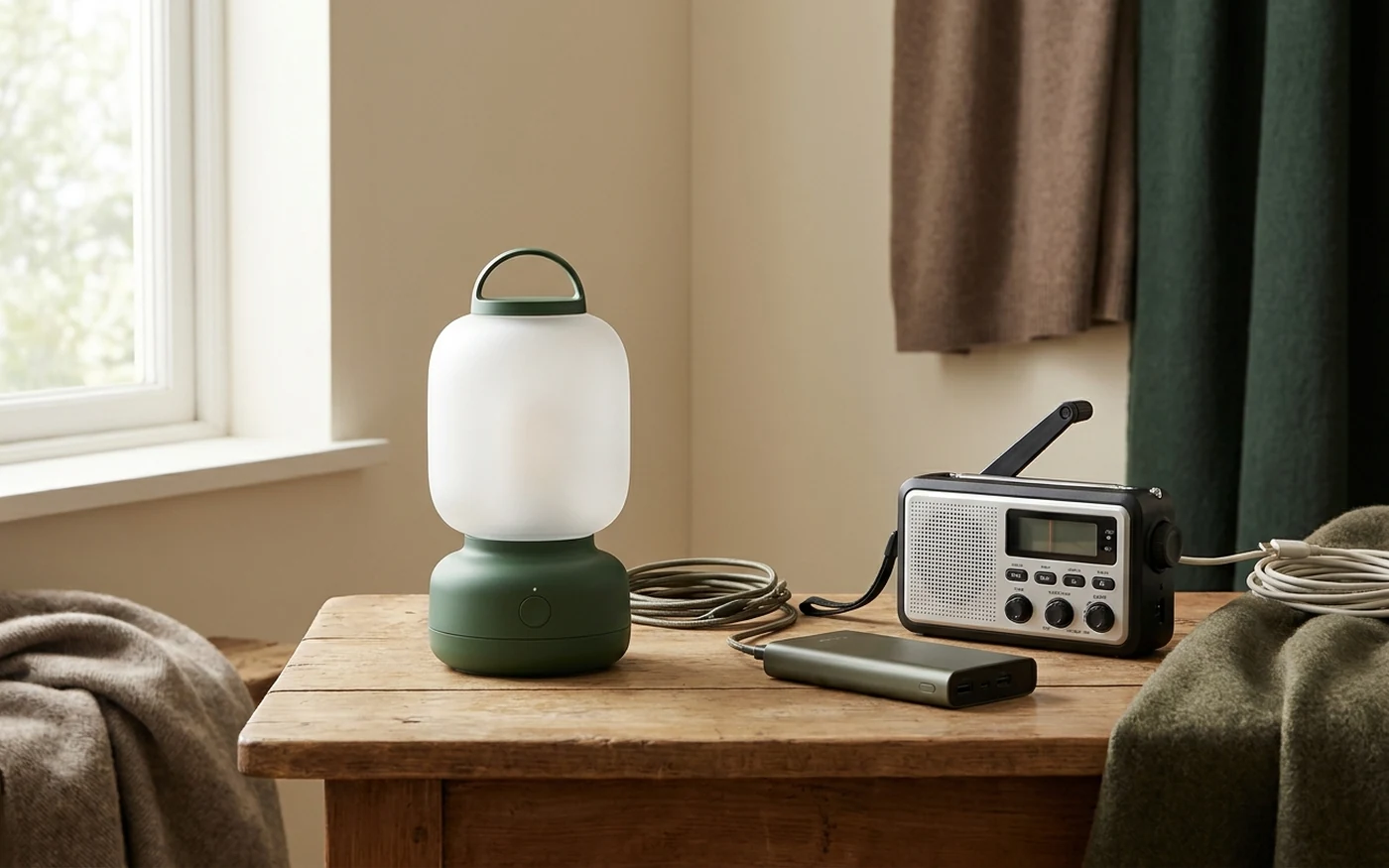
A power outage kit should start smaller than a generator.
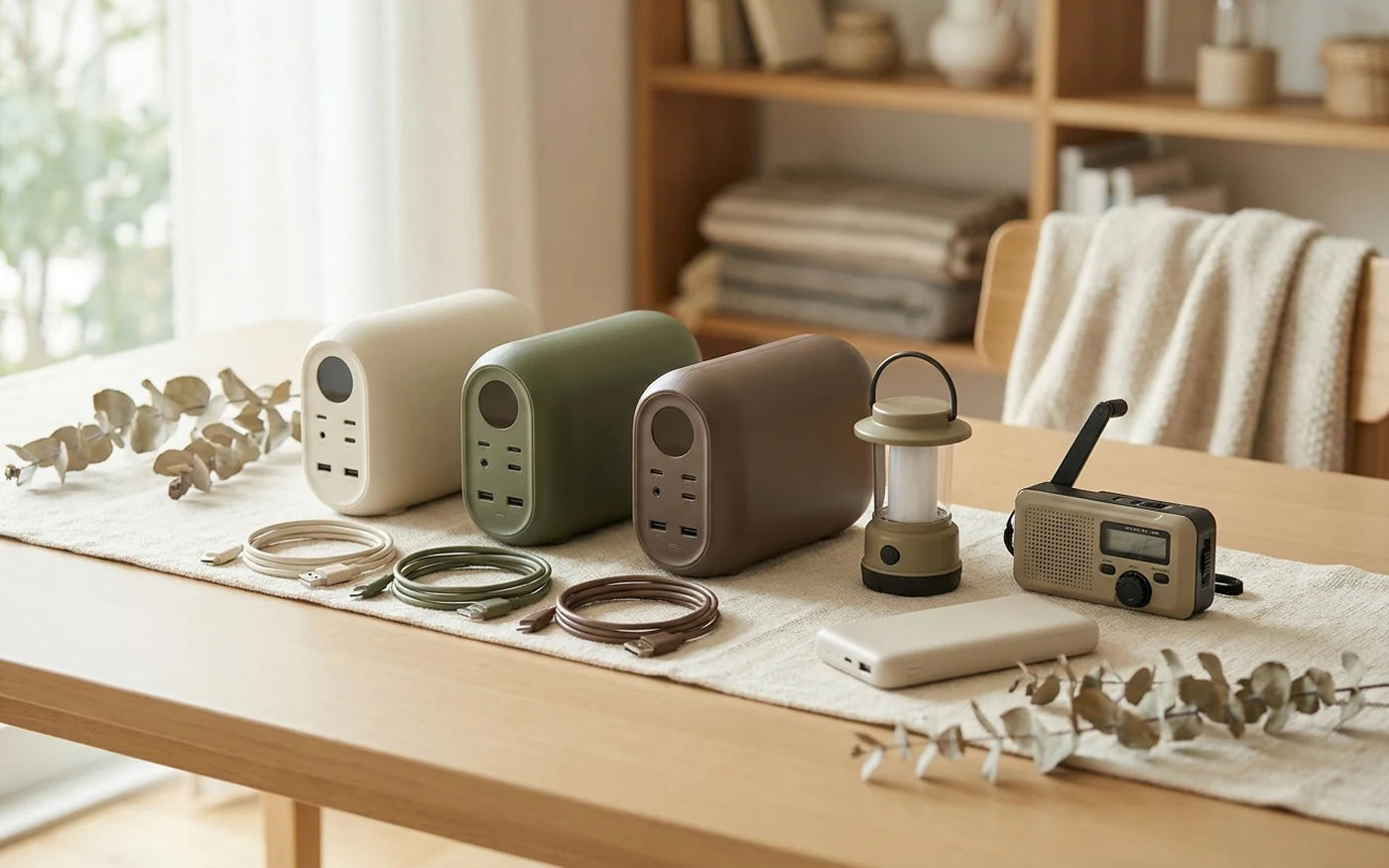
Start with light, phone battery and alerts first. Once those are handled, you can decide whether a larger power station or generator actually fits your home.
Solve the first outage needs before sizing up to larger backup power.
The common mistake
Most people start with the biggest power solution first.
When beginners think about power outages, they often jump straight to generators or large solar stations. Those can be useful, but they are not the first problem most households feel.
The first problem is simpler: can you see safely, keep your phone alive, receive alerts and avoid opening the refrigerator every ten minutes?
A good beginner power kit starts with the small needs that happen immediately. Bigger backup power only makes sense after you know what you are actually trying to run.
Too much too soonStart with essentials
You do not need to solve the whole house first. Start with the outage basics you will feel immediately.
False start
I bought a big backup system before knowing what I actually need to power.
Better first step
I covered light, phone battery and alerts first, then decided whether to size up.
The simple order
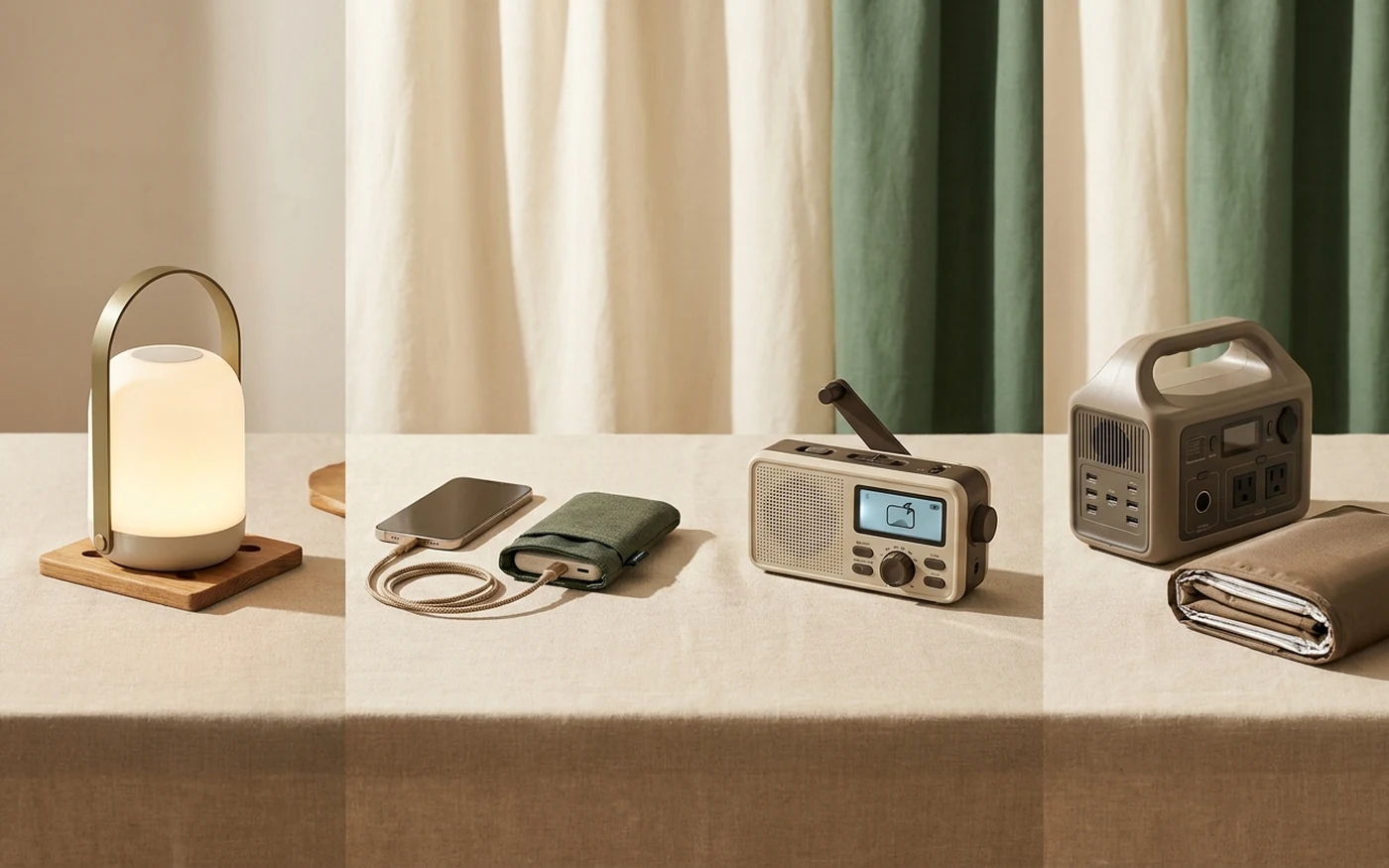
Use the four-layer outage plan: light, phone, alerts, backup.
You do not need to buy everything at once. Build in layers so every purchase solves a real outage problem.
LightMove safelyPhoneKeep one device aliveAlertsKnow what is happeningBackupSize up carefully
Layer 1
Light — move safely after dark
A reliable lantern or flashlight matters more than decorative candles. Choose lighting you can place, carry and recharge or feed with common batteries.
Best for
rooms, stairs and hallways
safe movement after dark
hands-free placement when possible
Look for
brightness modes
runtime guidance
stable base or hanging hook
rechargeable or common batteries
Layer 2
Phone — keep one device alive
A phone is your map, contacts, alerts and flashlight backup. A compact power bank is often the easiest first power purchase.
Best for
one priority phone
small USB lights
short outages
Look for
USB-C support
clear capacity specs
battery indicator
charge speed
Layer 3
Alerts — know what is happening
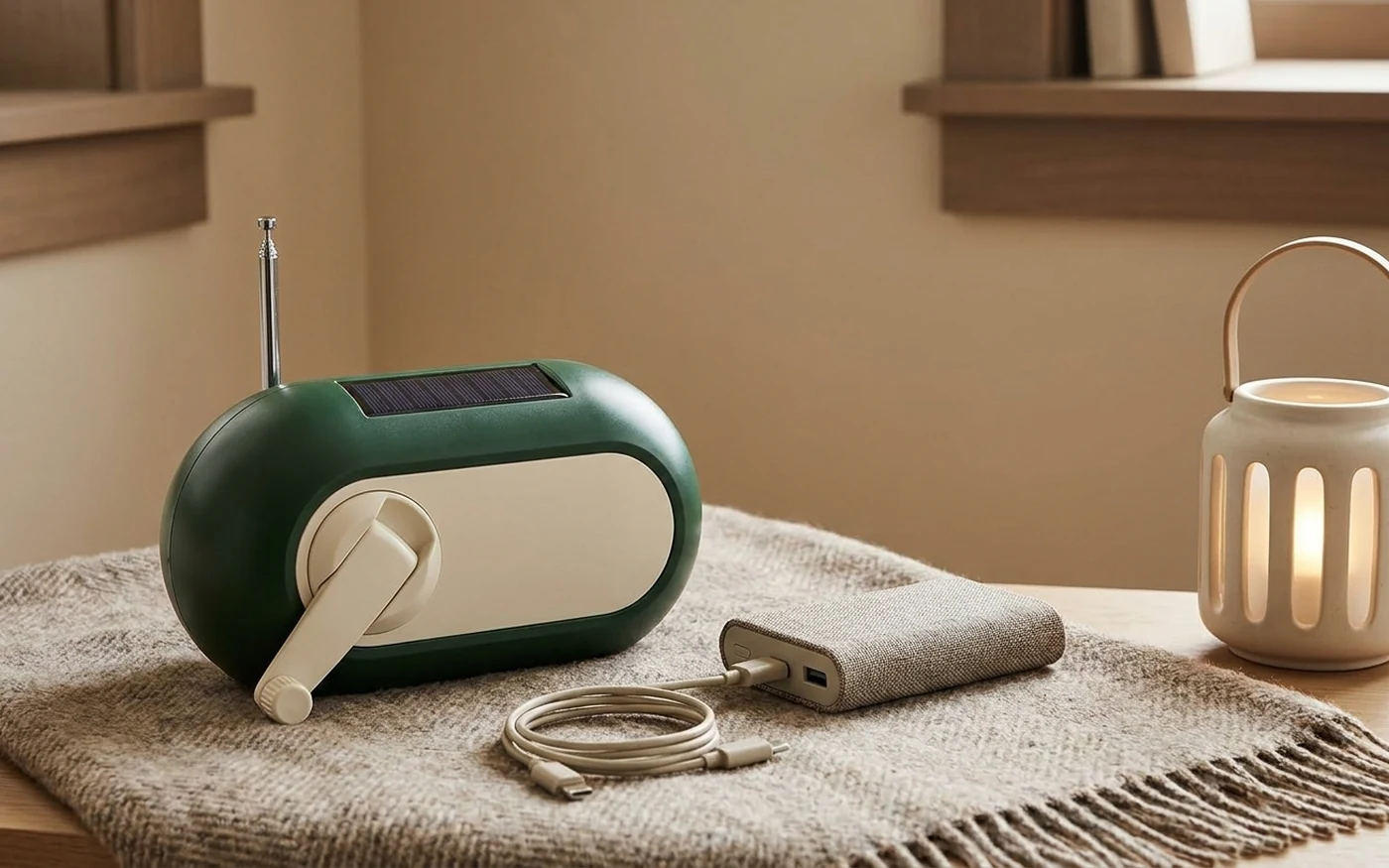
A weather radio or hand-crank/battery radio helps when internet or cell service is weak.
Best for
weather alerts
cell-service gaps
overnight storm monitoring
Look for
NOAA/weather support where relevant
battery or hand-crank backup
simple controls
clear instructions
Layer 4
Backup — only size up after the basics
A power station or generator should match specific needs. For fuel generators, safety matters as much as wattage.
Best for
specific device needs
longer outages
planned step-up purchases
Look for
realistic wattage needs
safe operating instructions
CO safety planning
outdoor-only generator use
First 12 hours
Decide what matters in the first 12 hours.
Most short outages do not require a whole-house solution. They require calm decisions. Keep the refrigerator and freezer closed. Use safe lighting. Charge only the devices that matter. Save large backup systems for specific needs.
Before you buy
Compare the job, not just the product.
The right power basic depends on the job you need it to do. Use this checklist before comparing Amazon options later.
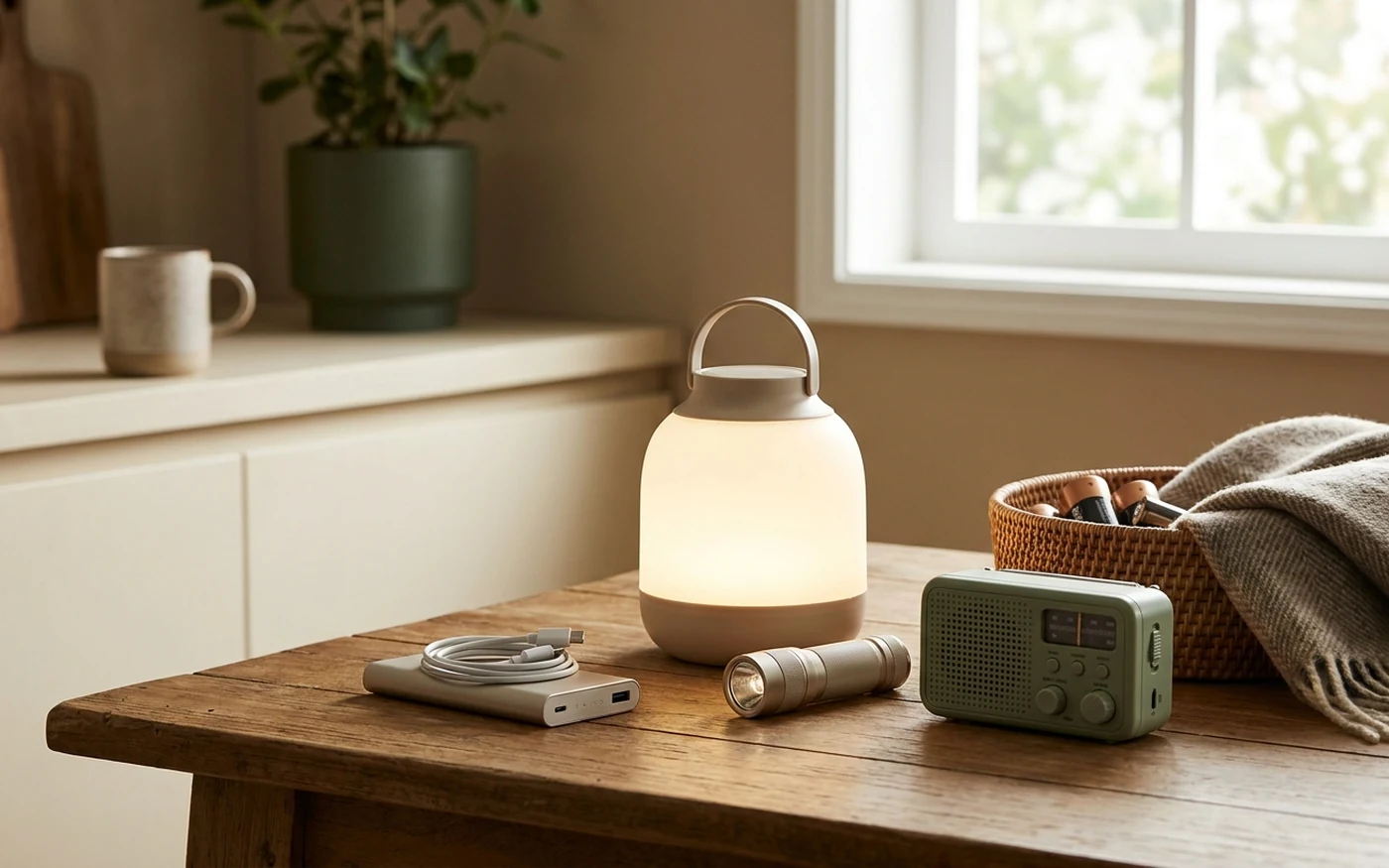
Battery lantern or flashlight
Best when:
safe movement, rooms, stairs and simple night lighting.
Check before buying:
brightness modes
runtime
rechargeable vs standard batteries
stable base or hanging hook
Avoid if: relying only on phone flashlight or candles.
Power bank
Best when:
keeping phones, small USB lights or radios alive.
Check before buying:
capacity
USB-C
charge speed
pass-through rules
clear battery indicator
Avoid if: assuming one tiny charger can support a whole family for days.
Radio / larger backup power
Best when:
alerts and longer outages.
Check before buying:
NOAA/weather alerts where relevant
hand-crank/solar as backup
safe use instructions
realistic wattage if choosing a power station
Avoid if: fuel generators without CO safety planning.
Start here
Choose based on the outage you are most likely to feel.
Start with the outage problem you are most likely to notice first, then add only the backup layer that fits your home.
If you live in an apartment
Start with lanterns, power banks and a small radio. Fuel generators are often not realistic or safe for apartment living.
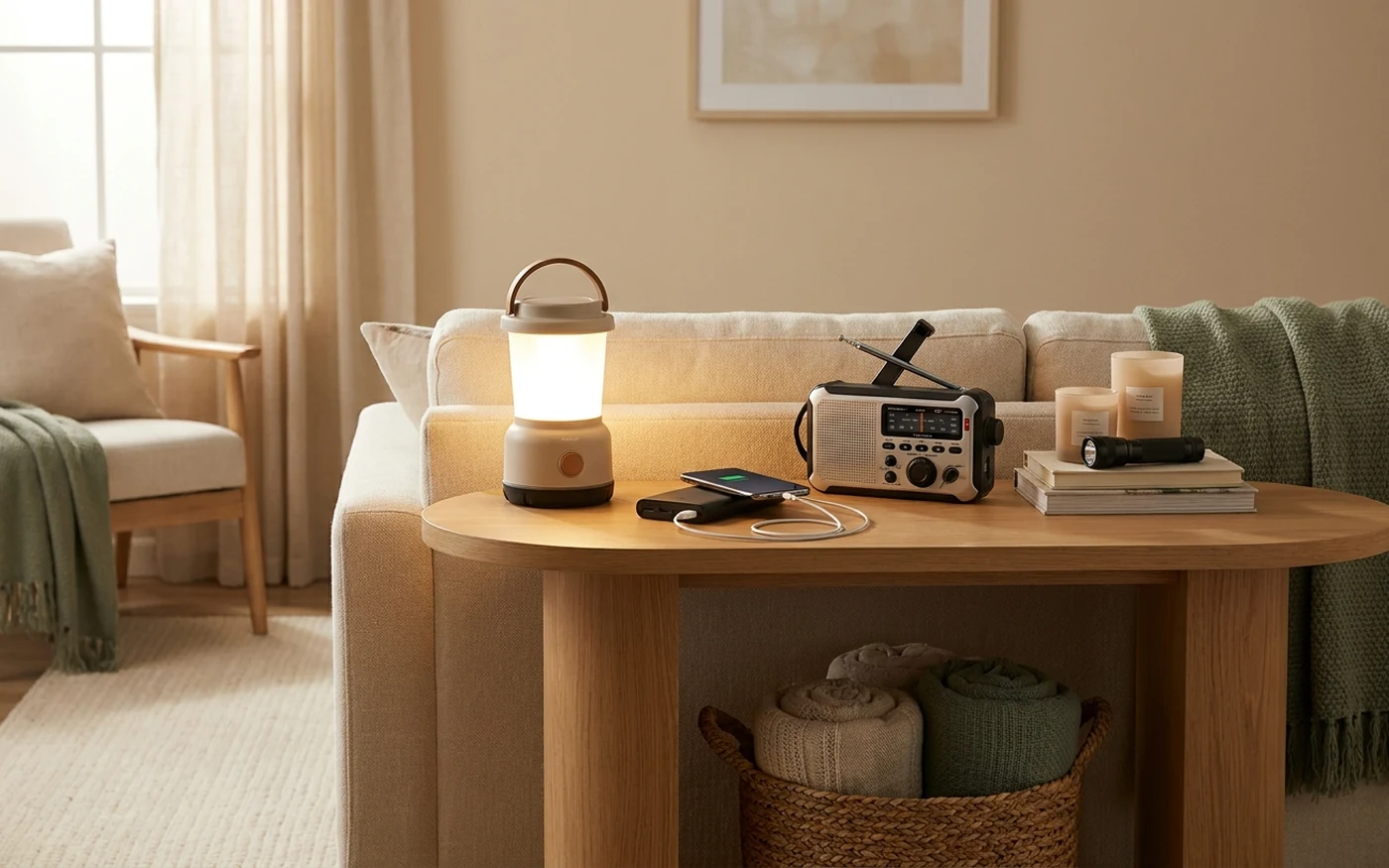
These Amazon picks follow the guide’s order: light, phone battery, alerts, a small planned backup layer and carbon monoxide safety before any fuel-burning equipment enters the plan.
Affiliate disclosure: As an Amazon Associate, Self Reliance Daily earns from qualifying purchases. Product links below may be affiliate links. Availability, prices and listing details can change, so always check the current Amazon page before buying. The visuals are category illustrations, not exact Amazon product photos.
First light
LE rechargeable LED lantern
Best for: safe room lighting and simple movement during short outages.
Power safety note: fuel-burning equipment belongs outdoors and away from windows. Product links are not a substitute for local code, manufacturer instructions or medical-device backup planning.
Safety note
Power backup should make your home safer, not riskier.
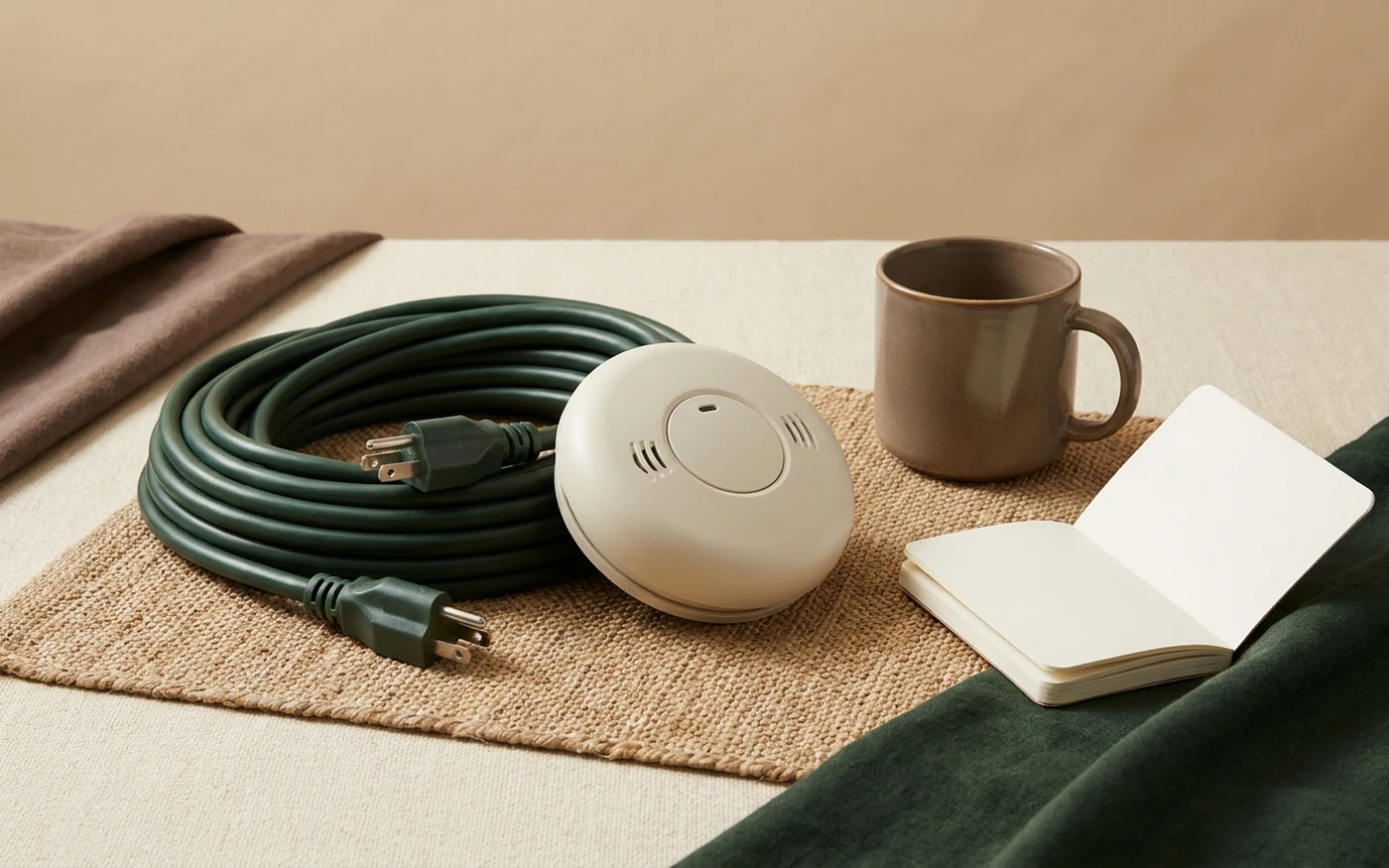
Keep fuel-burning equipment outdoors and away from windows. Use carbon monoxide alarms with battery backup. Do not use a gas stove or oven to heat your home. If anyone in the home depends on powered medical equipment, build a plan with a healthcare provider or equipment supplier before an outage happens.
Sources used for this guide
Ready.gov, CDC, FoodSafety.gov, American Red Cross and CPSC safety guidance were used to shape this beginner guide.
Ready.gov
CDC
FoodSafety.gov, American Red Cross and CPSC safety guidance
Next: build the rest of your starter kit slowly.
After power basics, build the rest of your starter kit slowly: water, food storage, backyard growing and first aid.