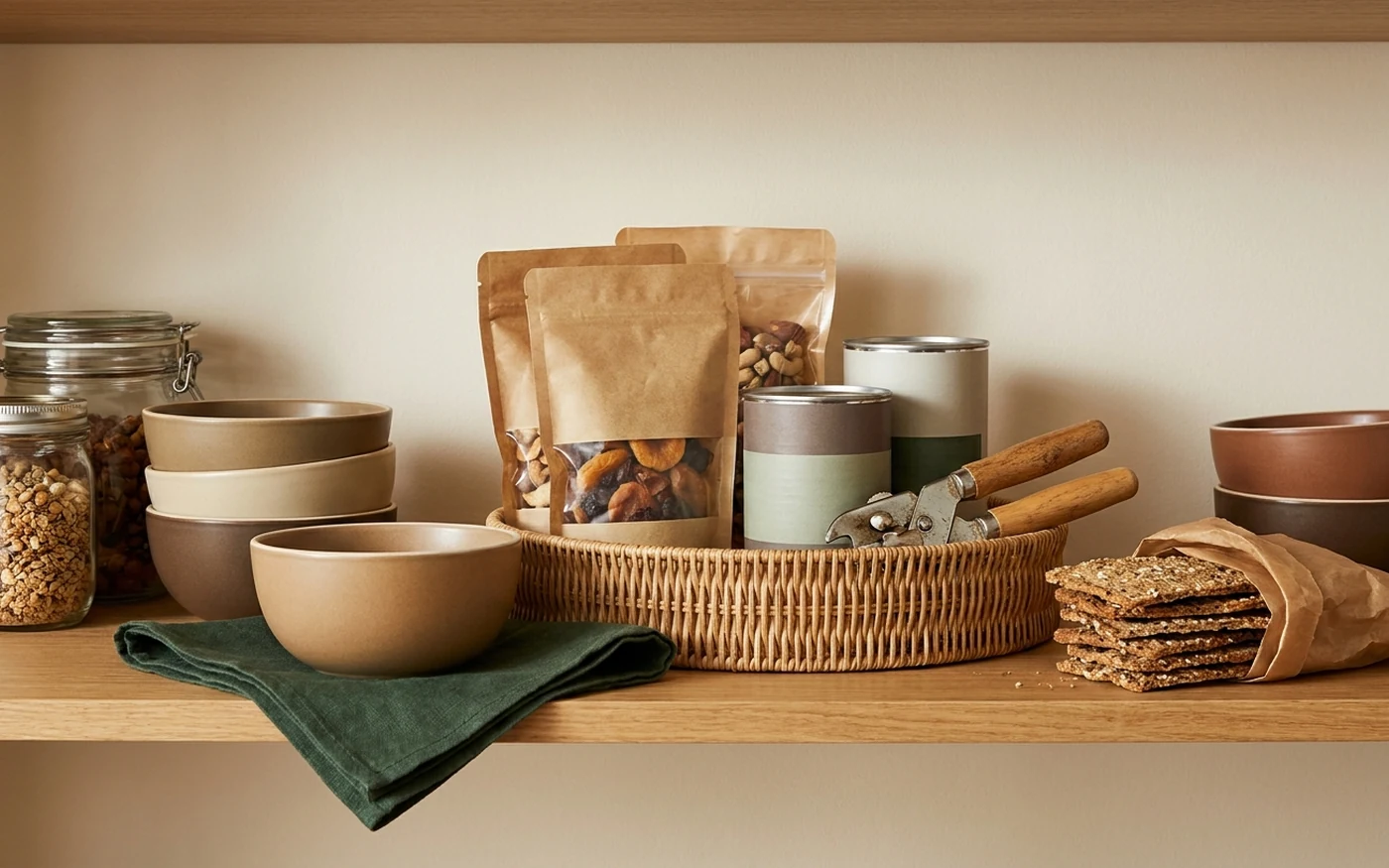
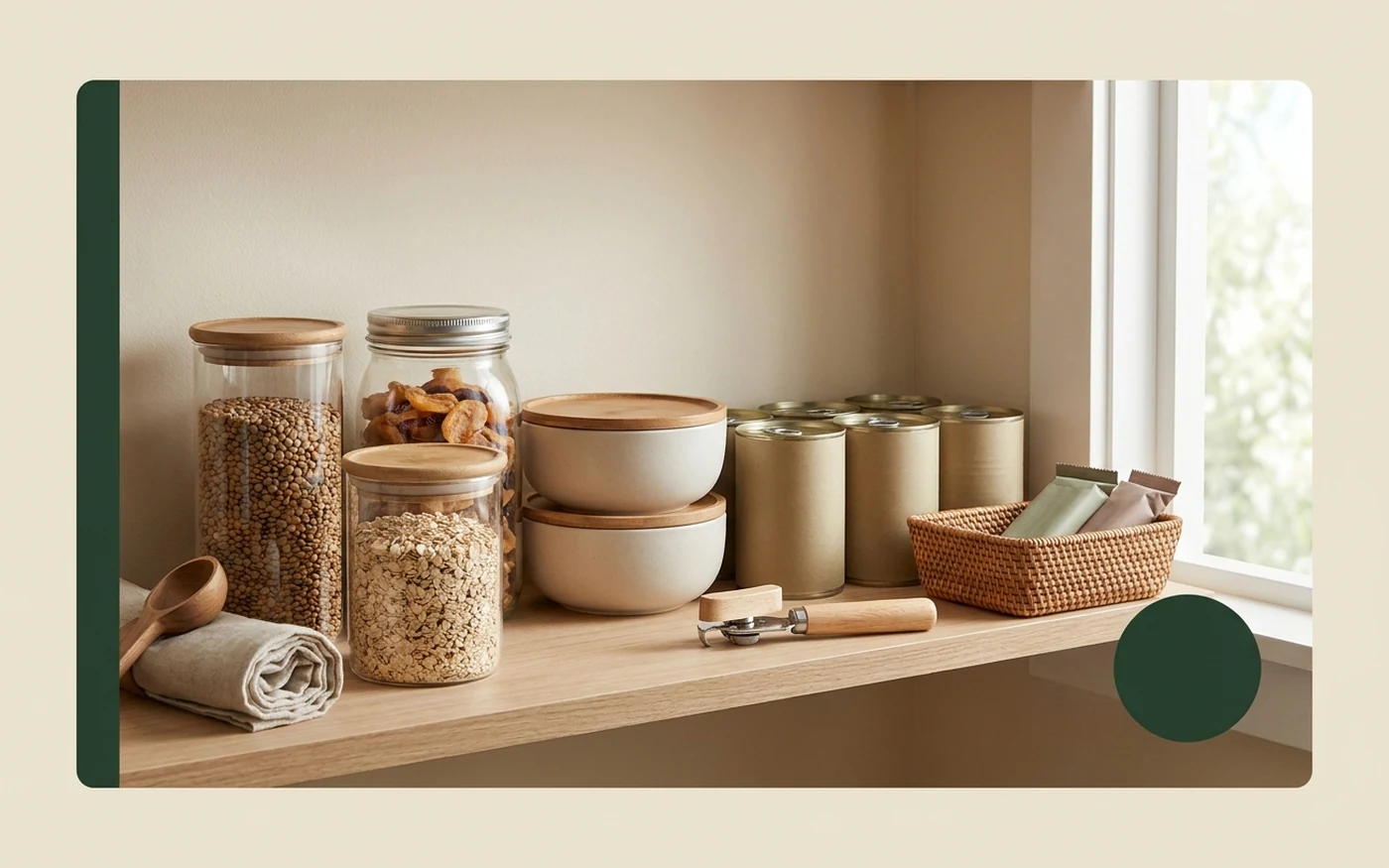
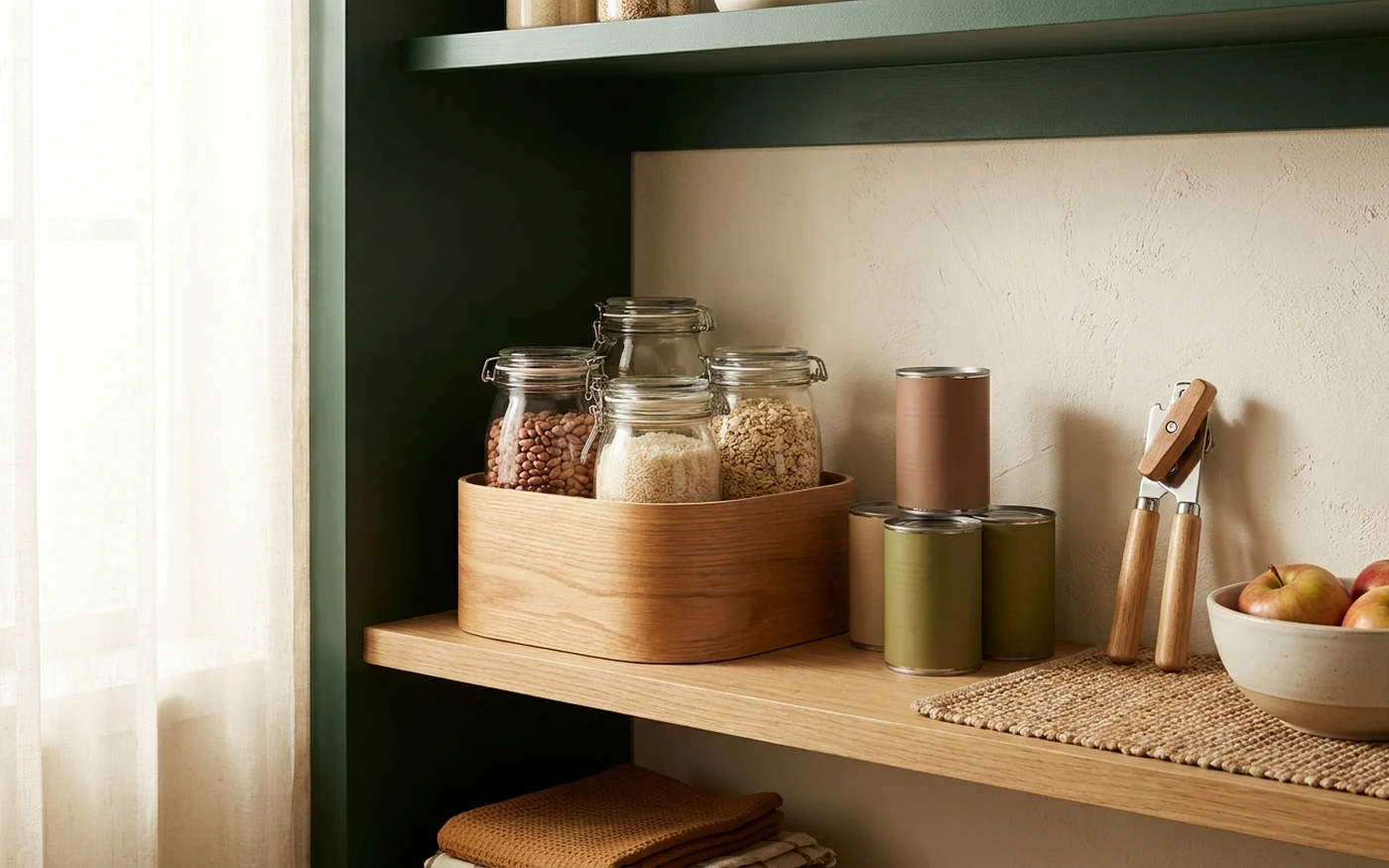
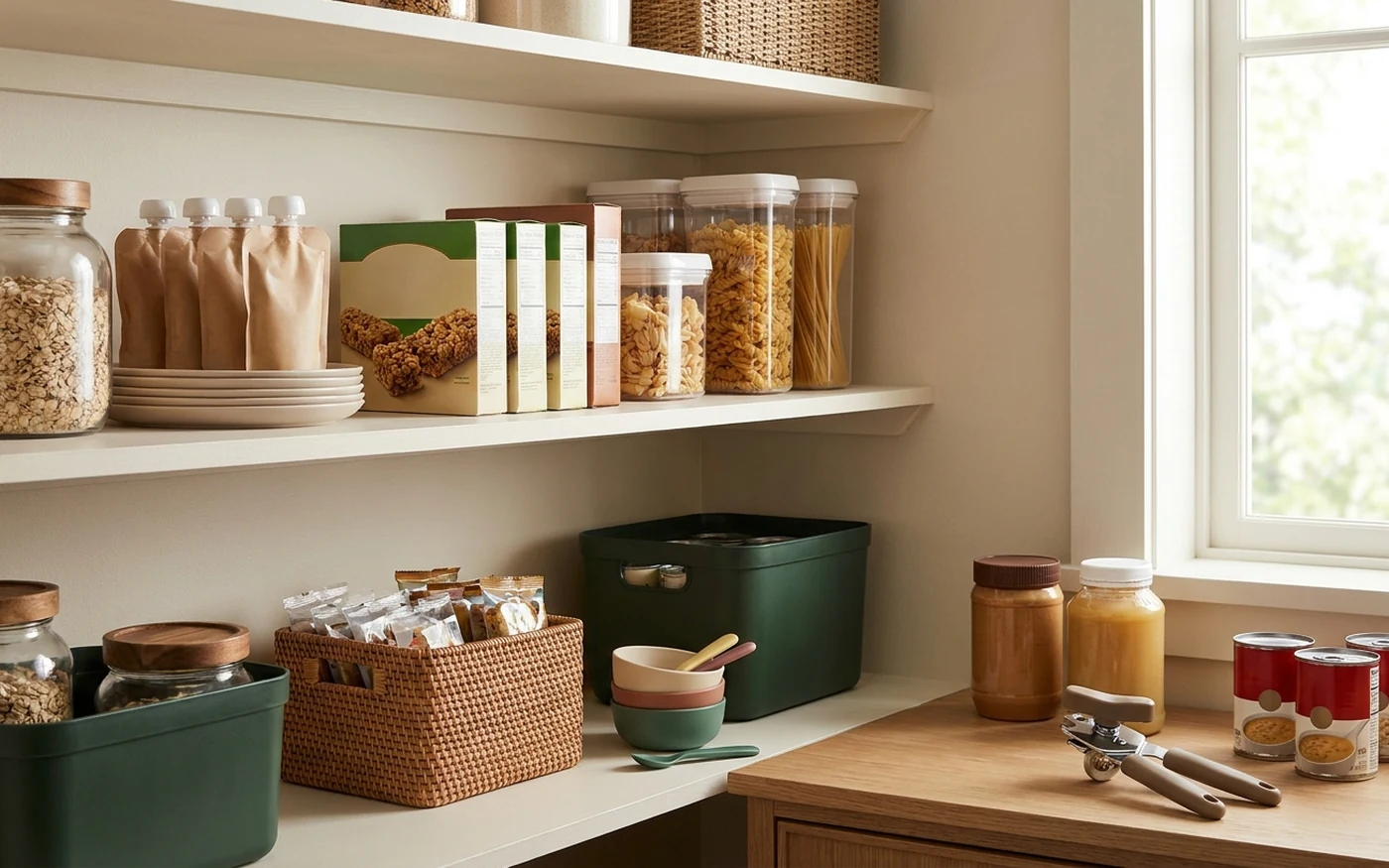
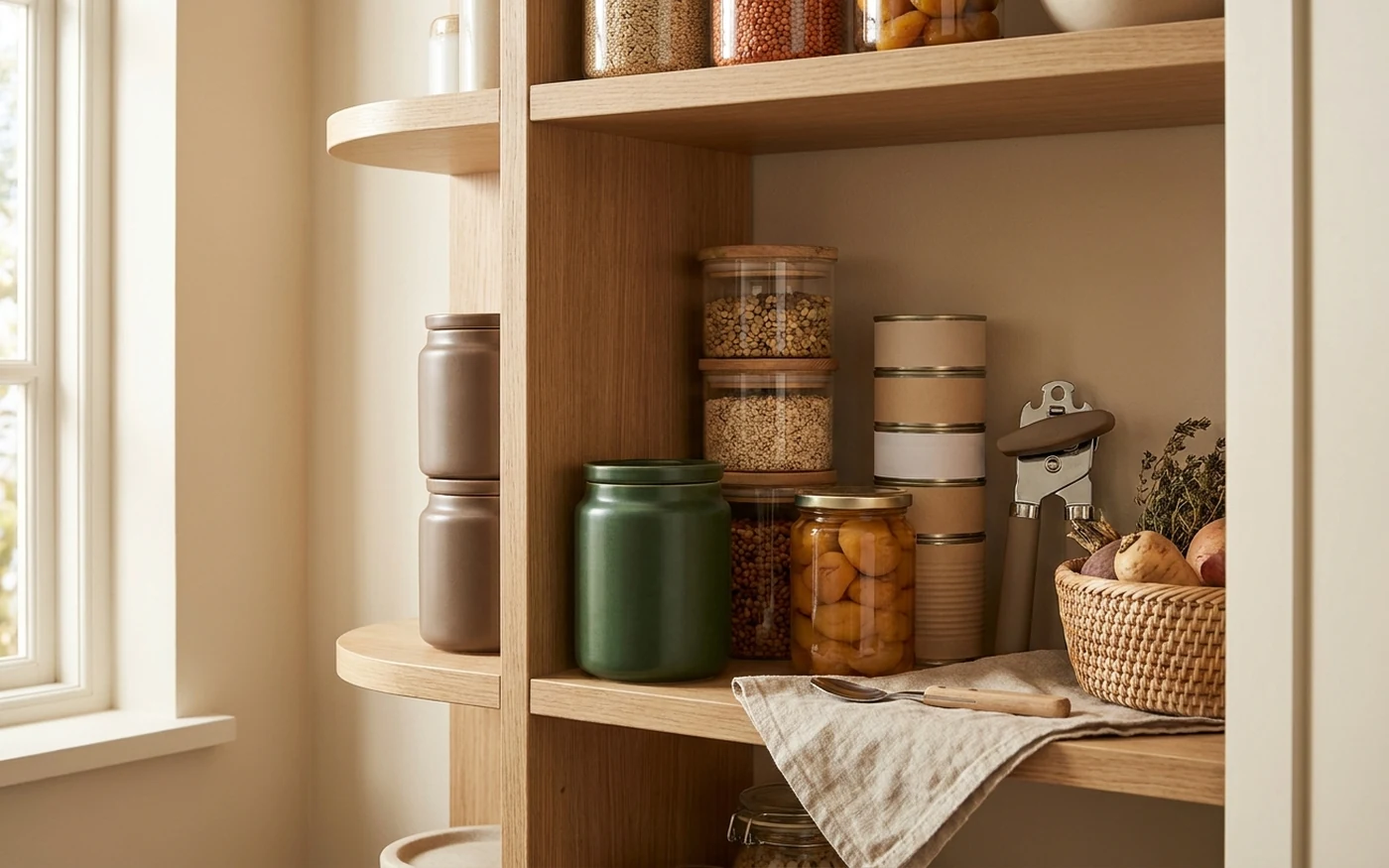
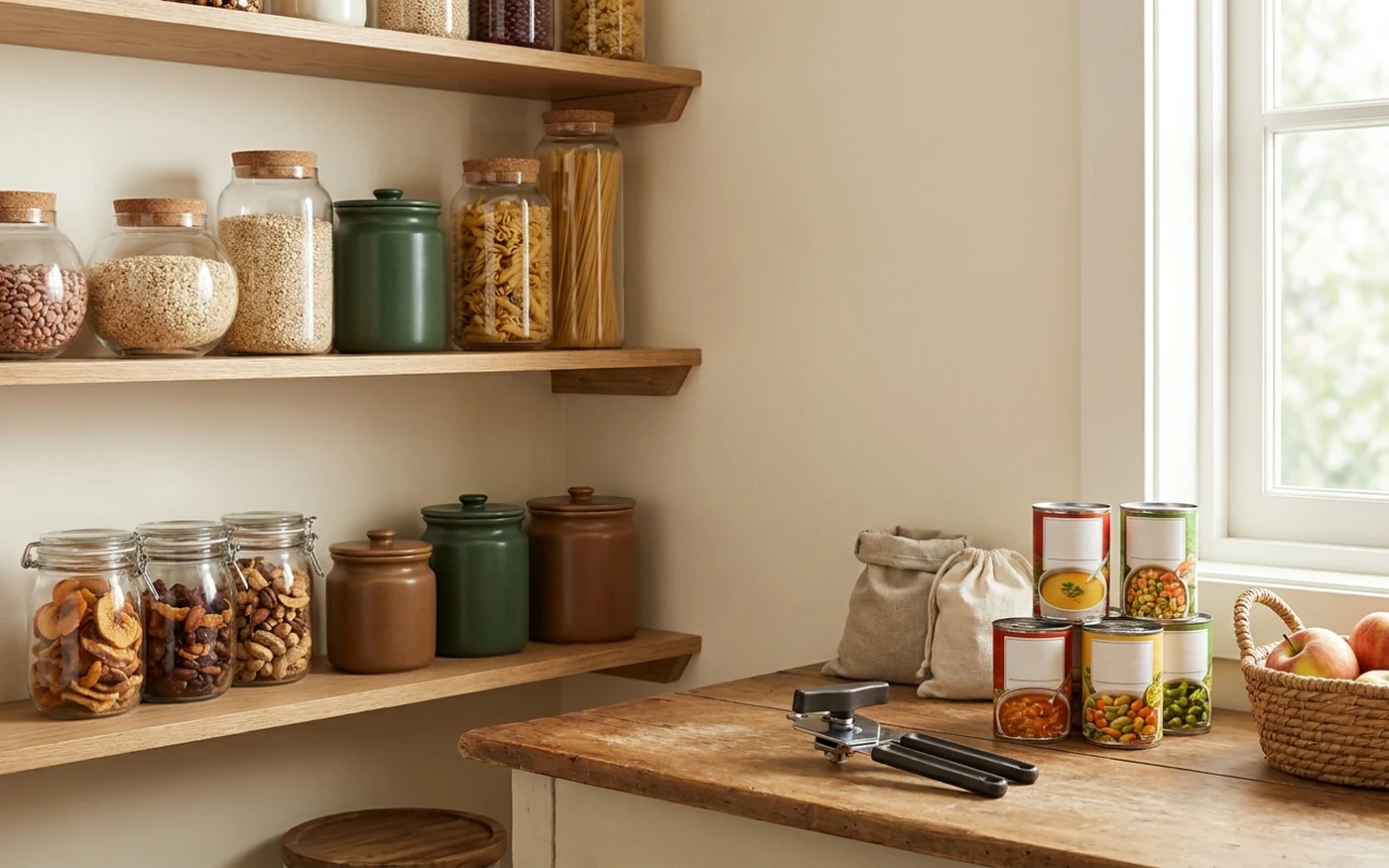
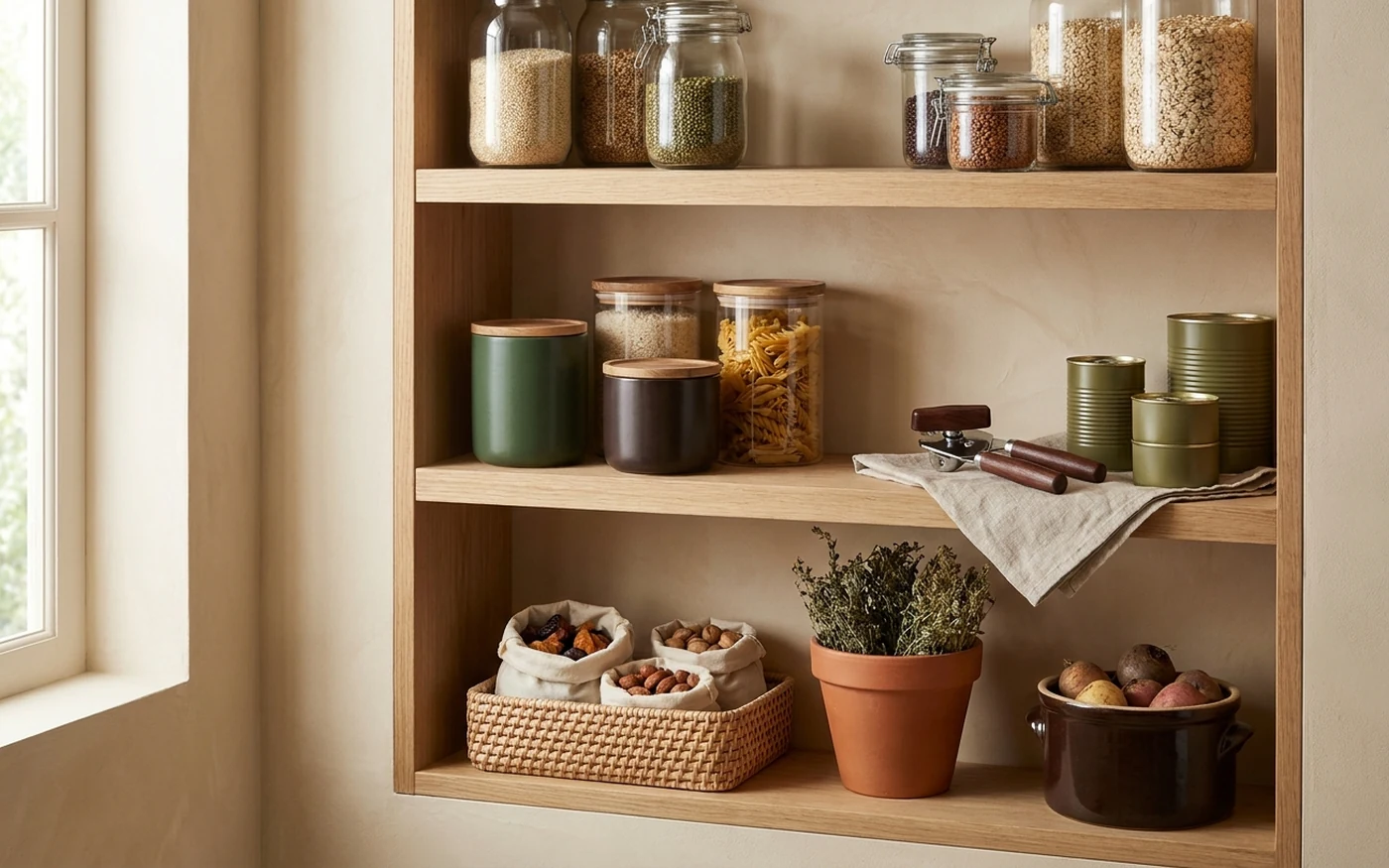
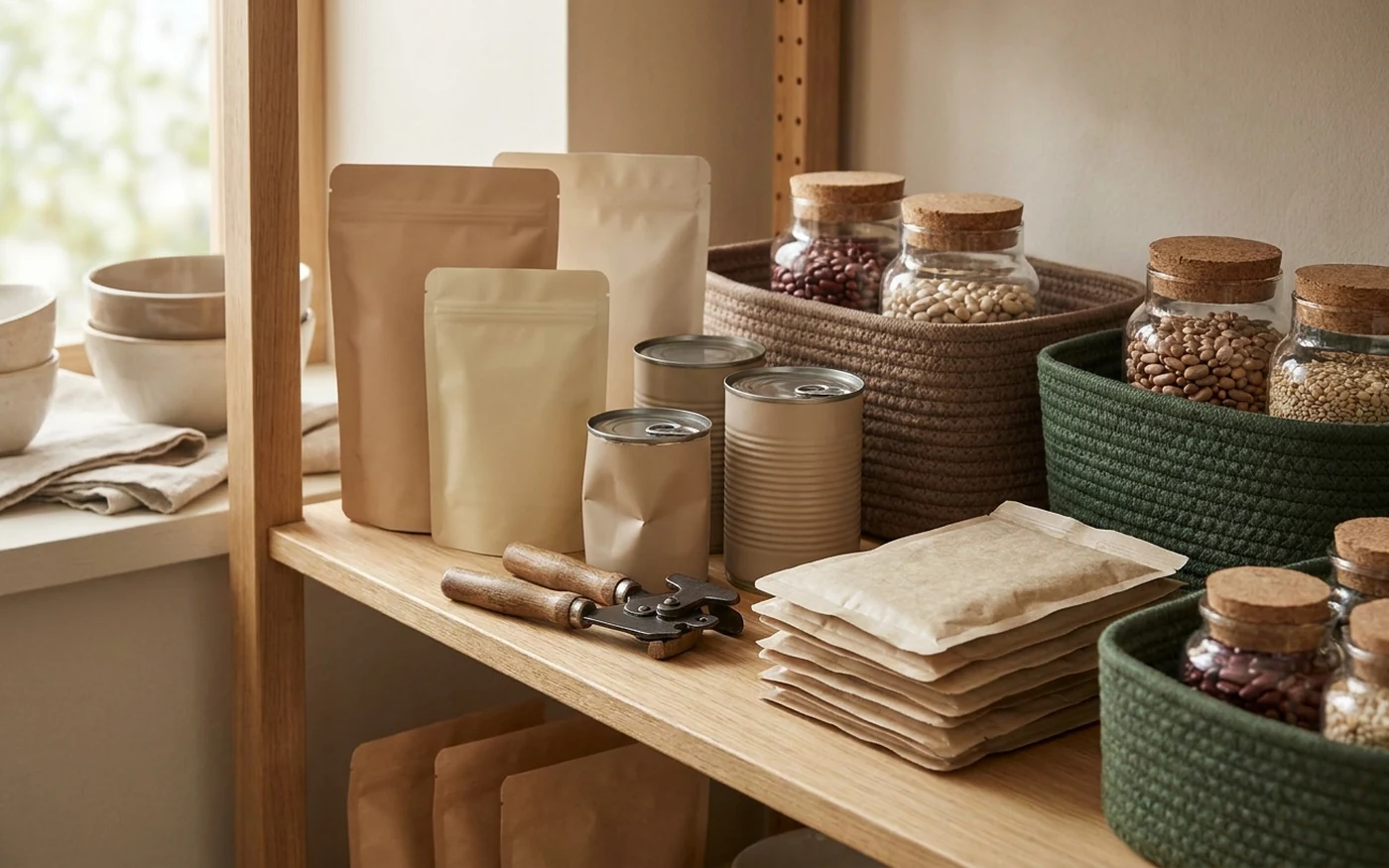
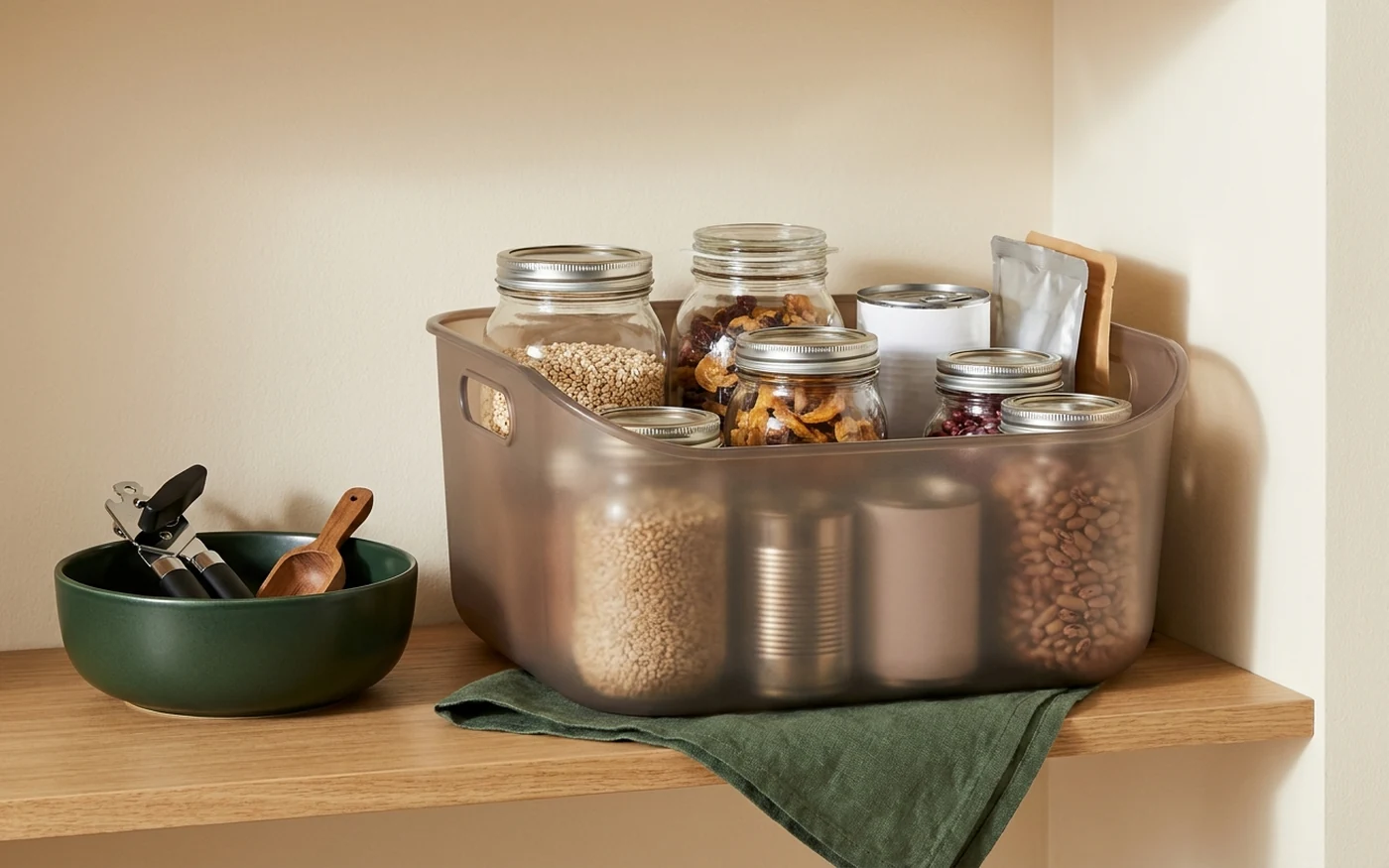
Emergency food should start with meals you would actually eat.
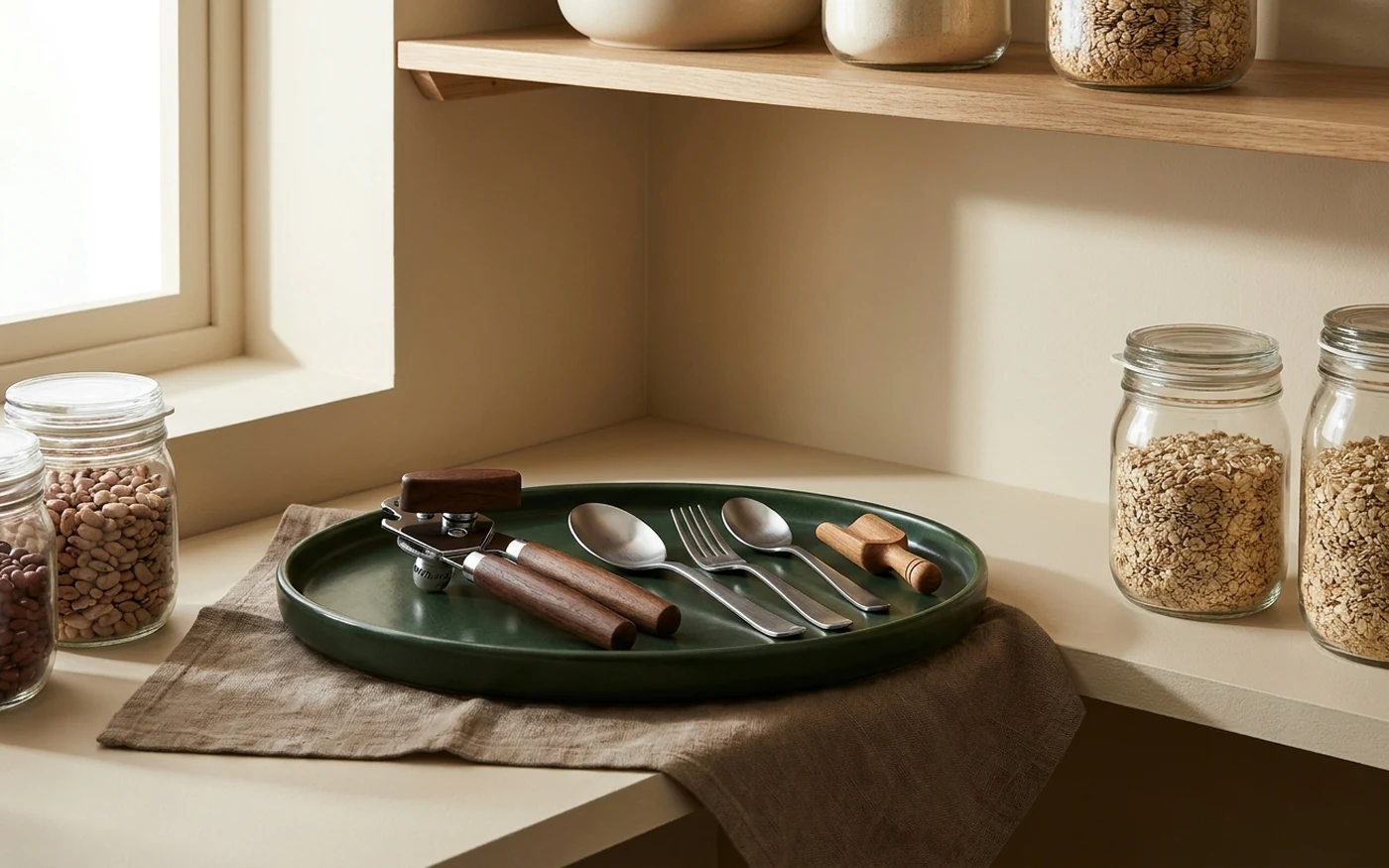
Before buying big survival buckets, build a simple no-cook pantry buffer: familiar foods, a manual can opener, and enough easy meals for the first few disrupted days.
Most people shop for emergency food before planning real meals.
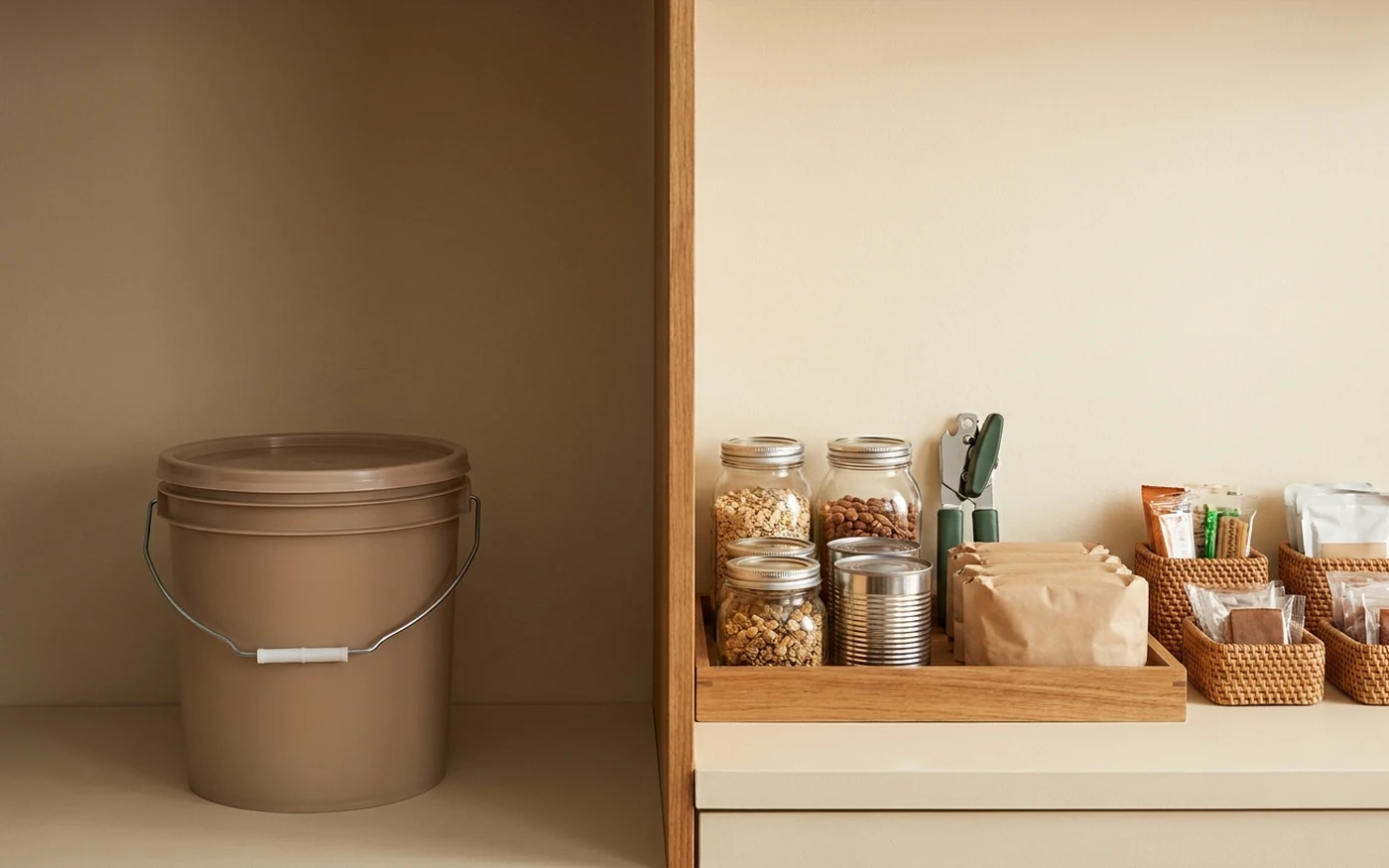
A giant food bucket can feel prepared, but it may not solve the first problem: what will your household eat if the power is out, the store is closed, or cooking is limited?
The better first step is a small food buffer built around familiar foods. Choose items that store safely, need little or no cooking, and match your family’s actual tastes and needs.
If the food requires water, heat, special prep or ingredients you forgot to store, it is not simple emergency food.
Shelf life is not a meal planSimple food buffer
Start with meals your household will actually eat, then compare storage products later.
False start
I bought emergency food before checking water, cooking needs or family preferences.
Better first step
I planned a few simple meals, then bought shelf-stable food and a manual can opener.
The simple order
Use the three-layer food plan: familiar, no-cook, longer backup.
A practical food buffer begins with foods your household already understands, then adds no-cook options and longer backup later.
FamiliarFoods you already eatNo-cookWorks with limited powerLonger backupOnly after basics
Layer 1
Familiar pantry foods
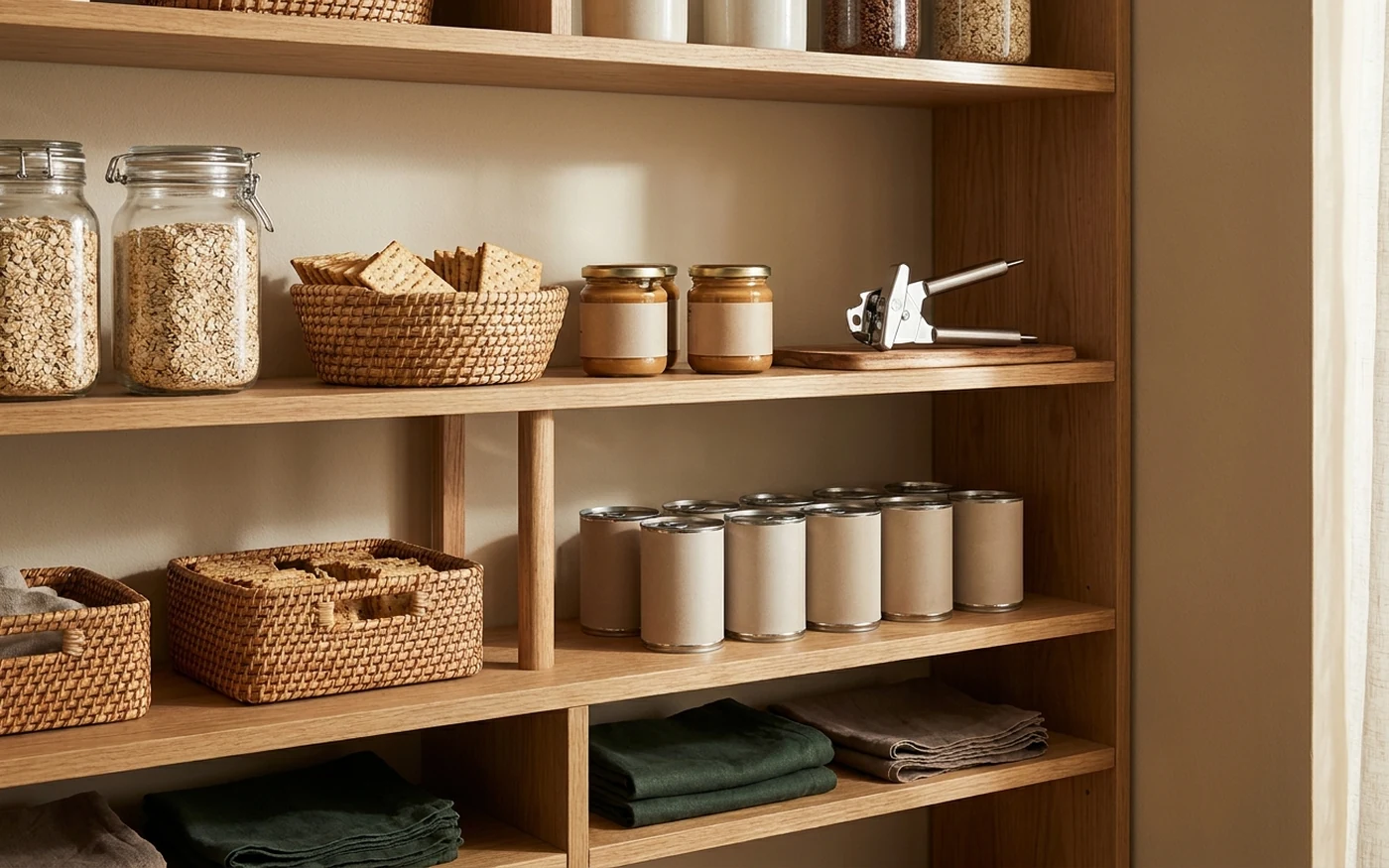
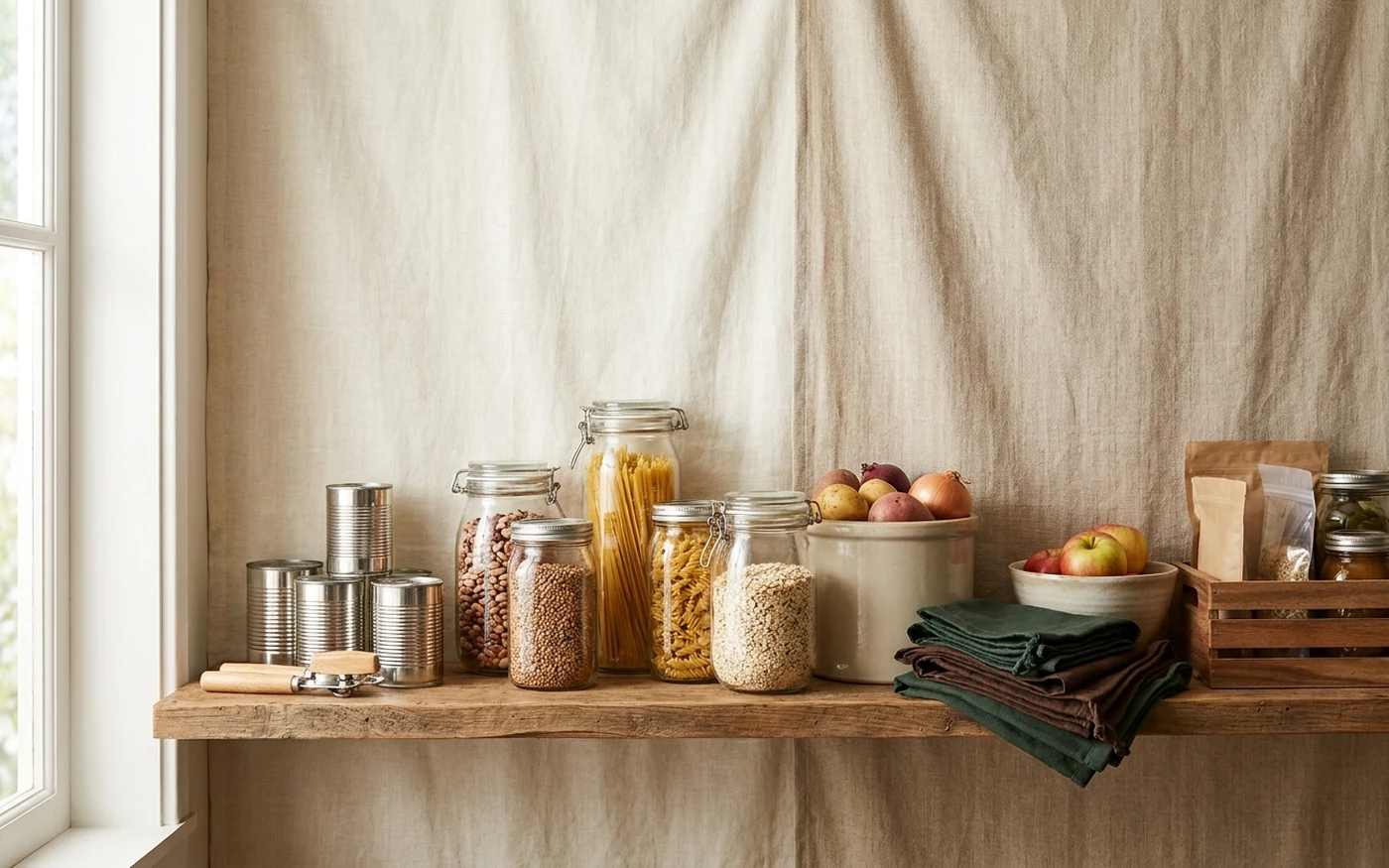
Start with foods your household already eats: canned meals, beans, tuna, nut butter, crackers, oats, dried fruit and snacks.
Best for
short disruptions
normal grocery rotation
foods people recognize
Look for
familiar ingredients
easy rotation
low prep
normal grocery availability
Layer 2
No-cook meals
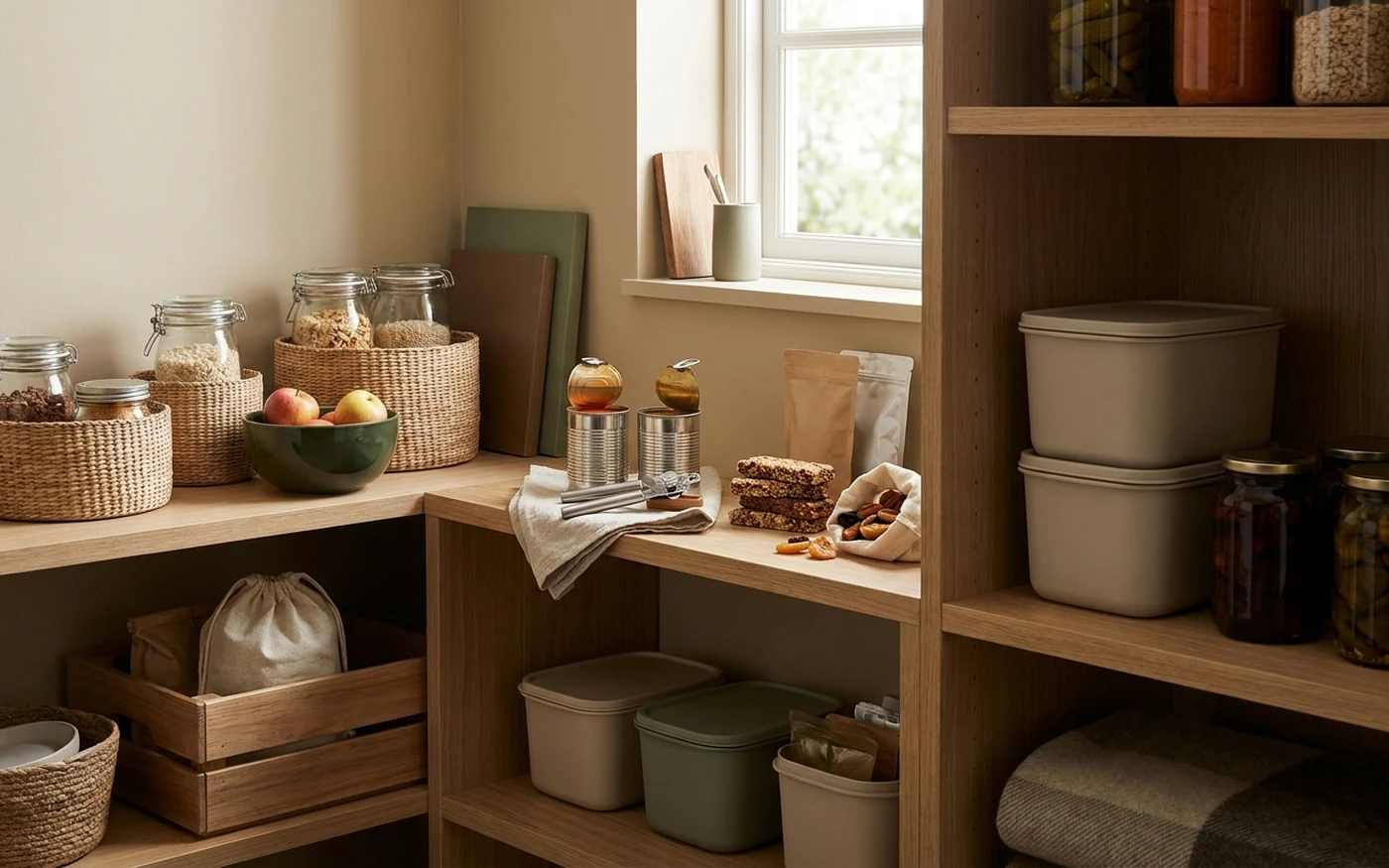
Add meals that can be eaten with minimal prep if the power is out or you do not want to use fuel.
Best for
power outages
limited cleanup
quick meals for stress
Look for
pull tabs or packets
allergens
calories per serving
required prep
Layer 3
Longer backup
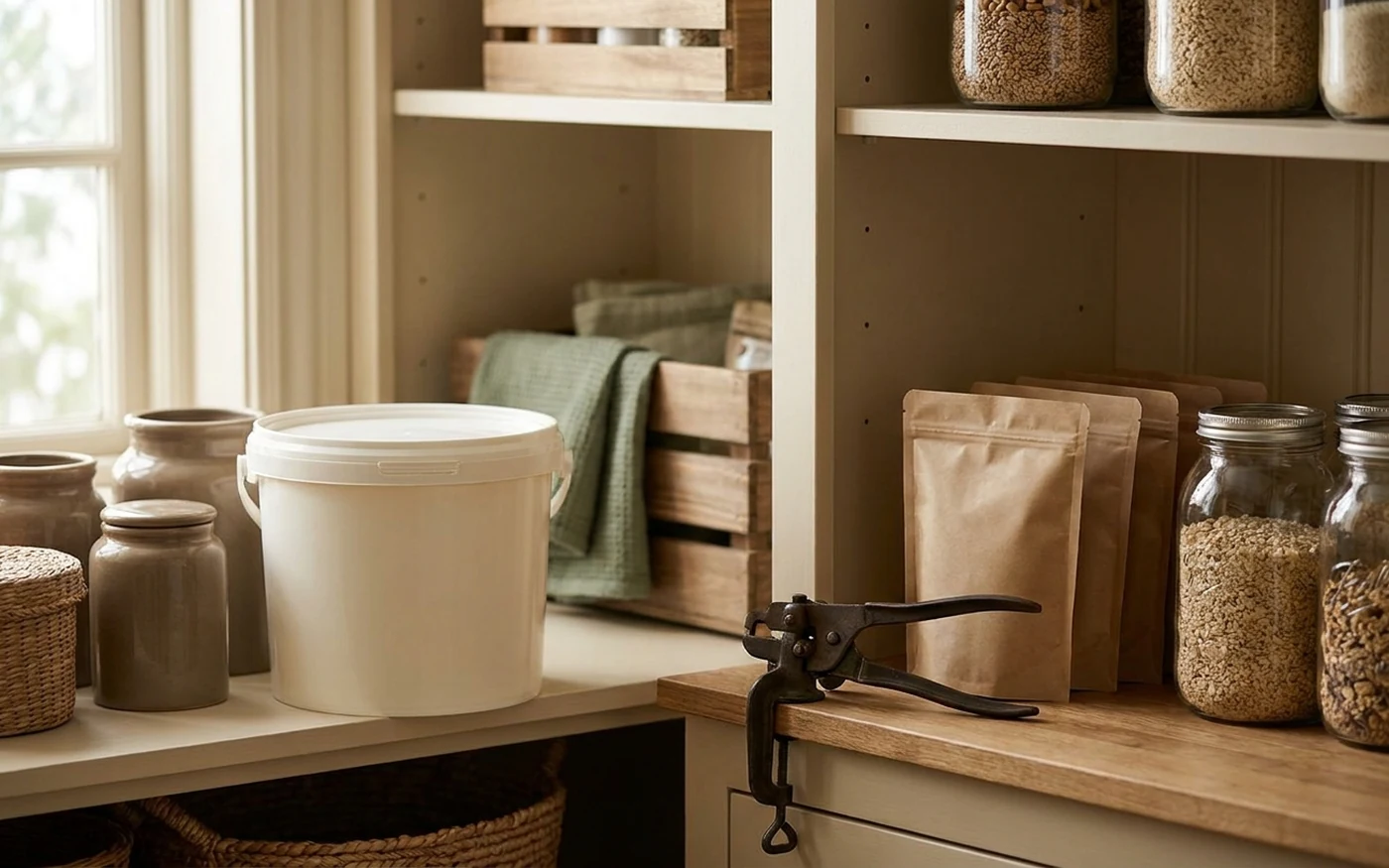
Freeze-dried meals, buckets or bulk storage can come later, once the short-term pantry buffer is handled.
Best for
later backup layers
longer disruptions
households with storage space
Look for
true servings/calories
water required
shelf-life documentation
storage temperature
Three-day buffer
Plan meals before products.
A useful beginner food kit starts with meals, not random cans. For each person, think in simple day blocks: breakfast, lunch, dinner, snacks and comfort items. Then check whether each item needs water, heat, utensils or a can opener.
Before you buy
Compare the job, not just the product.
The right food basic depends on the job it solves: normal pantry rotation, no-cook outage meals or a later longer-backup layer.
Pantry staples
Best when:
short disruptions and foods your household already likes.
Check before buying:
familiar ingredients
easy rotation
low prep
normal grocery availability
Avoid if: buying foods nobody wants to eat.
No-cook emergency meals
Best when:
outages where cooking, water or cleanup is limited.
Check before buying:
pull tabs/packets
calories per serving
allergens
sodium
required prep
Avoid if: meals that secretly require boiling water or extra ingredients.
Longer-term storage
Best when:
a later backup layer after the 3-day pantry buffer is built.
Check before buying:
true servings/calories
water required
shelf-life documentation
storage temperature
Avoid if: judging by serving count alone.
Start here
Choose based on how you really eat.
The best first food storage path is the one your household can actually eat, store and rotate.
If you are starting from zero
Buy three days of familiar shelf-stable foods first. Add a manual can opener before anything fancy.
These Amazon picks match the guide’s order: familiar shelf-stable meals first, then no-cook protein, rotation tools, manual tools and a longer-backup layer only when it solves a clear job.
Affiliate disclosure: As an Amazon Associate, Self Reliance Daily earns from qualifying purchases. Product links below may be affiliate links. Availability, prices and listing details can change, so always check the current Amazon page before buying. The visuals are category illustrations, not exact Amazon product photos.
Familiar meal starter
Chef Boyardee Beef Ravioli 4-pack
Best for: starting with a recognizable shelf-stable meal your household can compare against normal pantry habits.
These picks are practical comparison starting points, not a complete meal plan or a guarantee that any food is right for every household. Check allergens, nutrition labels, preparation needs and official food-safety guidance before relying on any stored food.
Safety note
Food safety matters during outages.
Keep refrigerator and freezer doors closed during outages. Official guidance says a refrigerator can keep food safe for about 4 hours if unopened, and a full freezer can hold temperature longer than a half-full freezer if kept closed. When in doubt, follow official food safety guidance and do not taste food to decide whether it is safe.
Sources used for this guide
Ready.gov, UGA Extension, CDC, FoodSafety.gov, FDA and USDA food safety guidance shaped this guide.
Ready.gov
UGA Extension
CDC
FoodSafety.gov
FDA and USDA food safety guidance
Next: build the rest of your starter kit slowly.
Food works best with the rest of the starter kit: water, power, backyard growing and first aid.